Too many people ask this question is devops really hard learn
"Is DevOps hard to learn?" gets asked constantly. Here's the honest, detailed answer — including what makes it hard, what makes it easier, and exactly how long it takes.

You've seen the job postings.
DevOps Engineer. $120k-$180k. Remote. Benefits. Stock options.
Then you read the requirements:
- 5+ years Linux system administration
- AWS, Azure, or GCP (certifications preferred)
- Docker and Kubernetes (production experience)
- CI/CD pipelines (Jenkins, GitLab, GitHub Actions)
- Infrastructure as Code (Terraform, CloudFormation, Pulumi)
- Configuration management (Ansible, Chef, Puppet)
- Monitoring and observability (Prometheus, Grafana, Datadog)
- Scripting (Bash, Python, Go)
- Networking (DNS, TCP/IP, load balancers, firewalls)
- Security (IAM, secrets management, compliance)
It looks like five different jobs glued together.
So you ask the question thousands of people ask every week: "Is DevOps really that hard to learn?"
I've been doing this for years. I've trained juniors. I've watched people succeed and fail. Let me give you the real answer.
The short answer
DevOps is not harder than becoming a doctor, a lawyer, or an electrical engineer.
But it is harder than learning frontend development. Harder than learning basic backend. Harder than data analysis.
The difficulty is not in any single concept. The difficulty is the breadth.
A frontend developer learns one ecosystem deeply (JavaScript, React, CSS). A DevOps engineer learns ten ecosystems well enough to be dangerous.
That's the challenge.
Part 1: What actually makes DevOps hard
Let me break down the specific reasons this field feels so overwhelming.
Reason 1: The endless tool landscape
Here's a partial list of tools you might encounter in your first year:
Version control: Git (mandatory)
CI/CD: GitHub Actions, GitLab CI, Jenkins, CircleCI, Travis, Bamboo, ArgoCD
Containers: Docker (mandatory), Podman, containerd
Orchestration: Kubernetes (almost mandatory), Docker Swarm, Nomad
Cloud: AWS, Azure, GCP (pick one, but know the others exist)
Infrastructure as Code: Terraform (mandatory), CloudFormation, Pulumi, CDK
Configuration Management: Ansible (common), Chef, Puppet, Salt
Monitoring: Prometheus, Grafana, Datadog, New Relic, Nagios, Zabbix
Logging: ELK stack (Elasticsearch, Logstash, Kibana), Loki, Splunk
Tracing: Jaeger, Zipkin
Networking: NGINX, HAProxy, Traefik, Envoy, Istio
Secret management: HashiCorp Vault, AWS Secrets Manager, Azure Key Vault
Scripting: Bash (mandatory), Python (very common), Go (growing)
No human knows all of these deeply. But you'll need familiarity with many.
The feeling of "I don't know enough" never fully goes away. That's the hardest part to accept.
Reason 2: Invisible problems
When a frontend developer has a bug, they see it. Button doesn't click. Text is misaligned. API returns wrong data.
When a DevOps engineer has a problem, the symptoms are vague:
- "The site is slow" (slow where? for whom? at what time?)
- "The database connection failed" (why? when? intermittently?)
- "CPU is spiking" (which process? why? what changed?)
You don't see the problem. You see clues. You become a detective.
This detective skill takes years to develop. You can't learn it from a tutorial. You learn it from being woken up at 3 AM and figuring it out.
Reason 3: The consequences are high
Frontend bug: user sees a broken button. Annoying but fine.
Backend bug: API returns wrong data. Bad but fixable.
DevOps mistake: you take down production. The website is down. Customers can't buy. Your phone explodes with alerts. Your manager is angry.
The pressure is different. Mistakes are public. The fear of breaking things makes learning slower because you're afraid to experiment.
Reason 4: You need to know the whole stack
To debug a slow website, you might need to understand:
- The user's browser (is it a client-side issue?)
- The CDN (is cloudflare caching correctly?)
- The load balancer (are requests distributing evenly?)
- The web server (is NGINX configured right?)
- The application code (is there a slow query?)
- The database (is it locked? under-provisioned?)
- The network (is there packet loss?)
- The operating system (is the kernel swapping?)
You don't need to be an expert in all of these. But you need to know enough to ask the right questions and rule out possibilities.
That's breadth again.
Reason 5: The learning never stops
Six years ago, everyone used Jenkins and Chef. Now it's GitHub Actions and Ansible.
Four years ago, Kubernetes was optional. Now it's expected.
Two years ago, Terraform was the standard. Now people are talking about Pulumi and Crossplane.
Next year, something else will be the standard.
You cannot learn DevOps once and be done. You will be learning continuously for your entire career.
For some people, this is exciting. For others, it's exhausting. Know which one you are.
Part 2: What makes DevOps easier than you think
Now let me balance the picture. It's not all bad.
It's not harder than other skilled trades
Plumbers learn dozens of pipe types, fitting methods, building codes, and diagnostic techniques. Electricians learn hundreds of components and safety regulations. Mechanics learn every system in a car.
DevOps is a skilled trade. It takes time, practice, and patience. But millions of people have learned it before you. You're not special (in a good way). If they can do it, so can you.
You don't need to be an expert in everything
Job descriptions are wish lists. No one expects you to know every tool.
A junior DevOps role typically requires:
- Basic Linux command line (cd, ls, grep, ps, top, systemd)
- Basic cloud knowledge (EC2, S3, IAM — just the fundamentals)
- Basic Docker (run a container, build an image)
- Basic CI/CD (trigger a pipeline on push)
- Basic scripting (write a 10-line Bash loop)
That's it. The rest you learn on the job.
Senior roles require more. But you're not starting at senior.
The fundamentals never change
Learn these once. Use them forever.
- Linux filesystem structure (
/var,/etc,/tmp,/home) - Process management (PID, signals, daemons)
- File permissions (chmod, chown, umask)
- Networking basics (IP addresses, ports, DNS, TCP vs UDP)
- HTTP protocol (methods, status codes, headers, body)
- SSH authentication (keys, agent forwarding, config)
- Bash scripting (variables, loops, conditionals, exit codes)
These are 20+ years old. They will be relevant 20 years from now.
Master the fundamentals. The tools on top change. The foundation doesn't.
You already know more than you think
If you've ever:
- Opened a terminal and typed a command
- Deployed code to a server (even via FTP)
- Set up a WordPress site (database, web server, files)
- Written a script to rename 100 files
- Debugged why "localhost" wasn't working
You already have DevOps skills. You just haven't connected them yet.
The community is incredibly helpful
DevOps people love teaching. Go to any meetup, conference, or Discord server. Ask a question. Someone will answer.
There are thousands of free resources:
- YouTube tutorials for every tool
- Blog posts solving every problem
- Courses on every platform
- ChatGPT to explain concepts and debug errors
You are not alone. Thousands of people are learning the same things right now.
Part 3: The actual timeline (honest estimate)
Let me give you a realistic path with honest time commitments.
Assumes: 10-15 hours per week of focused study.
Month 1 — Linux fundamentals
- Navigate the filesystem (cd, ls, pwd, tree)
- Manipulate files (cp, mv, rm, touch, cat, less)
- Understand permissions (chmod, chown, umask)
- Manage processes (ps, top, kill, jobs, bg, fg)
- Use text editors (vim or nano — enough to edit files)
- Understand systemd services (start, stop, enable, status)
- Read logs (journalctl, tail, grep)
By end of month 1: You can navigate a Linux server, edit config files, restart services, and check logs. This is junior-level capability.
Month 2 — Scripting and automation
- Bash variables, loops, conditionals, functions
- Exit codes and error handling
- Cron jobs for scheduling
- Basic Python (or stay with Bash — both are fine)
By end of month 2: You can write scripts to automate repetitive tasks. You never type the same command twice in a row.
Month 3 — One cloud platform (pick AWS)
- Create an account (use free tier)
- Launch an EC2 instance (virtual server)
- Connect via SSH
- Set up security groups (firewall rules)
- Create an S3 bucket (storage)
- Understand IAM users, groups, and roles
By end of month 3: You can launch and configure basic cloud resources.
Month 4 — Containers (Docker)
- Run a container (docker run)
- List, stop, remove containers
- Build an image from a Dockerfile
- Push images to a registry (Docker Hub)
- Understand volumes (persistent data)
- Use docker-compose for multi-container apps
By end of month 4: You can containerize a simple application.
Month 5 — CI/CD pipelines
- Set up a GitHub account
- Create a simple repository
- Write a GitHub Actions workflow
- Run tests on every push
- Deploy to a server or cloud
By end of month 5: You have an automated pipeline. Push code → tests run → code deploys.
Month 6 — Infrastructure as Code (Terraform)
- Install Terraform
- Write a configuration to create one EC2 instance
- Run plan, apply, destroy
- Understand state files
- Use variables and outputs
By end of month 6: You can provision infrastructure with code.
Month 7 — Put it together Build a project that uses everything:
- Terraform creates an EC2 instance
- Docker container runs your app
- GitHub Actions builds and deploys
- You wrote scripts to manage it
- Everything runs on Linux
By end of month 7: You have a complete DevOps project to show employers.
Total: 6-8 months to junior-ready.
That's not fast. It's also not five years. It's achievable.
Part 4: The learning path with specific resources
Linux:
- "Linux Journey" (free website)
- "The Linux Command Line" by William Shotts (free PDF)
Bash scripting:
- "Bash Guide" (free on GitHub)
- "Learn Bash in Y Minutes" (quick reference)
AWS:
- "AWS Cloud Practitioner" (free training on AWS Skill Builder)
- Adrian Cantrill's courses (paid, but excellent)
Docker:
- "Docker Curriculum" (free)
- "Play with Docker" (free browser-based lab)
CI/CD:
- "GitHub Actions documentation" (free, excellent)
- "Learn GitHub Actions" (free on GitHub)
Terraform:
- "Terraform Up & Running" (book, worth buying)
- "Terraform Tutorials" (Hashicorp's free site)
Don't buy everything. Pick one free resource per topic. Complete it. Then move on.
Part 5: The difference between people who succeed and people who quit
People who quit:
- Try to learn everything at once
- Get overwhelmed and stop
- Don't build real projects
- Wait until they "feel ready" (never happens)
- Compare themselves to 10-year veterans
- Give up after the first week of confusion
People who succeed:
- Focus on one thing at a time
- Accept confusion as normal
- Build small projects constantly
- Start before they're ready
- Compare themselves only to yesterday
- Keep going after the first week of confusion
The difference is not intelligence. It's persistence.
Part 6: The honest answer to "is it worth it?"
Yes.
Not because it's easy. Because it's valuable.
DevOps engineers are paid well because the work is hard. Supply and demand. Fewer people can do it → higher salaries.
The average DevOps salary in the US is $120k-$180k. Senior roles go to $200k+. Contractors charge $150-$250/hour.
But the money is not the main reason.
DevOps work is satisfying. You fix real problems. You make systems better. You learn constantly. You have massive impact.
If you like puzzles, debugging, and learning new things, DevOps is genuinely fun.
The bottom line
DevOps is hard to learn. Not impossibly hard. Not "only geniuses can do it" hard.
It's "spend 6-8 months studying consistently" hard. It's "be confused for weeks" hard. It's "keep going when you feel stupid" hard.
That's the real answer to the question.
Most people who ask "is DevOps hard?" are really asking "can I do it?"
Yes. You can.
Not because you're special. Because thousands of people have done it before you. They were confused too. They felt overwhelmed too. They kept going.
You can too.
Written by Fredsazy — because "hard" usually means "I haven't started yet."

Iria Fredrick Victor
Iria Fredrick Victor(aka Fredsazy) is a software developer, DevOps engineer, and entrepreneur. He writes about technology and business—drawing from his experience building systems, managing infrastructure, and shipping products. His work is guided by one question: "What actually works?" Instead of recycling news, Fredsazy tests tools, analyzes research, runs experiments, and shares the results—including the failures. His readers get actionable frameworks backed by real engineering experience, not theory.
Share this article:
Related posts
More from Devops
May 27, 2026
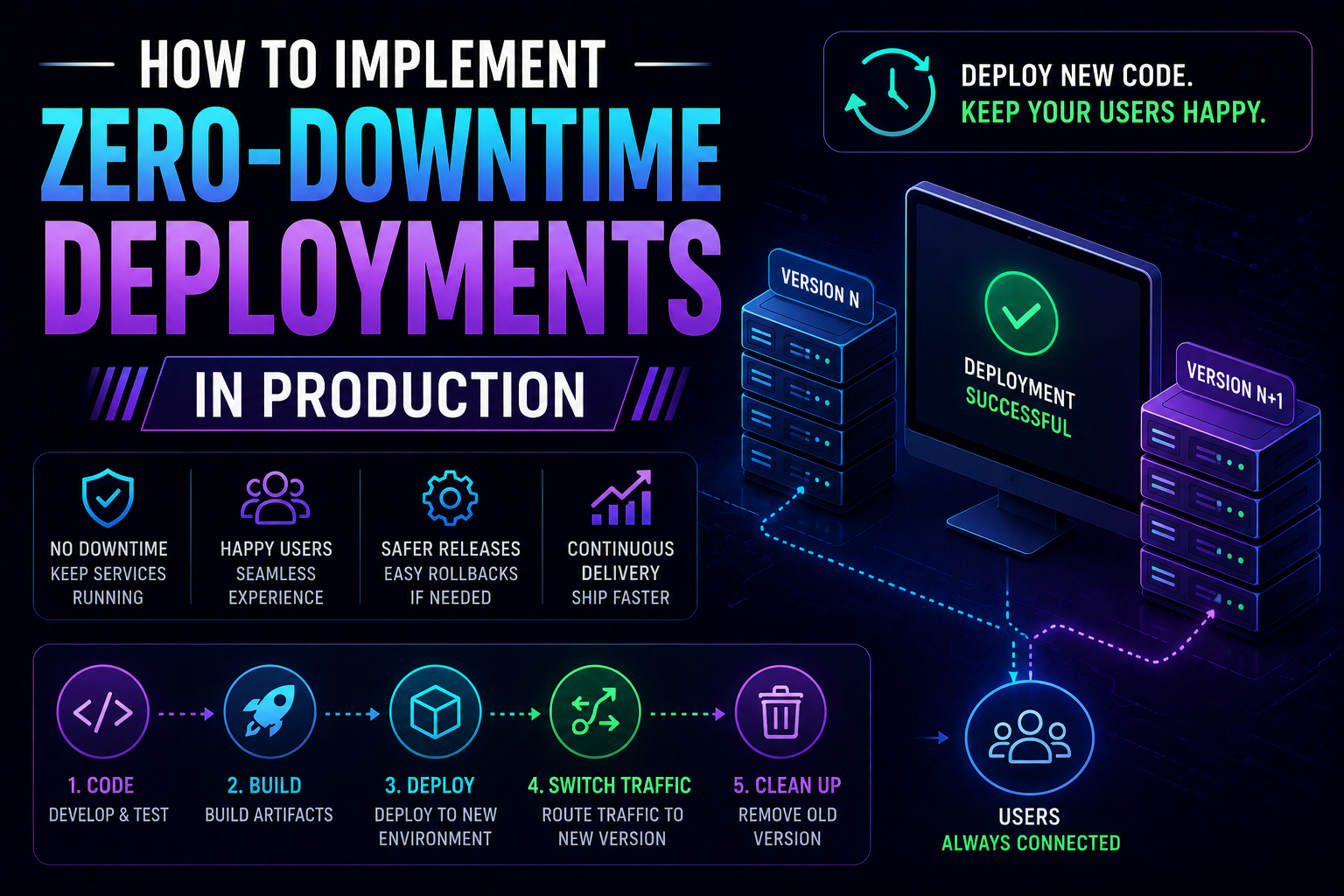
273Learn how to implement zero-downtime deployments in production — covering rolling updates, blue-green deployments, canary releases, feature flags, database migration patterns, graceful shutdown, and automated rollback with real Kubernetes YAML and code examples.
May 13, 2026
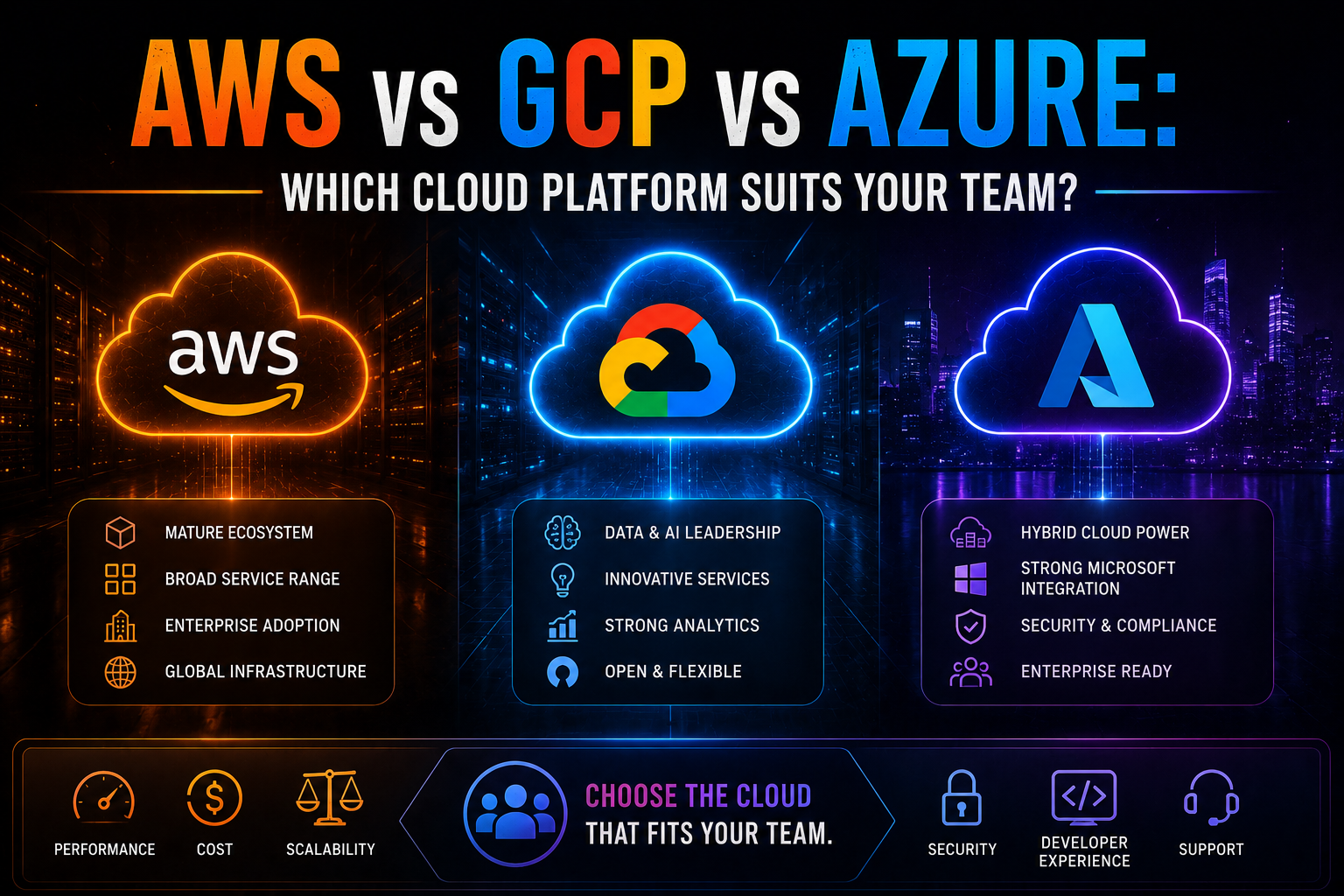
1045AWS vs Azure vs GCP in 2026 — an honest, vendor-neutral comparison covering market share, AI/ML tooling, pricing, Kubernetes, compliance, and which cloud platform suits your team's specific workload and ecosystem.
May 13, 2026
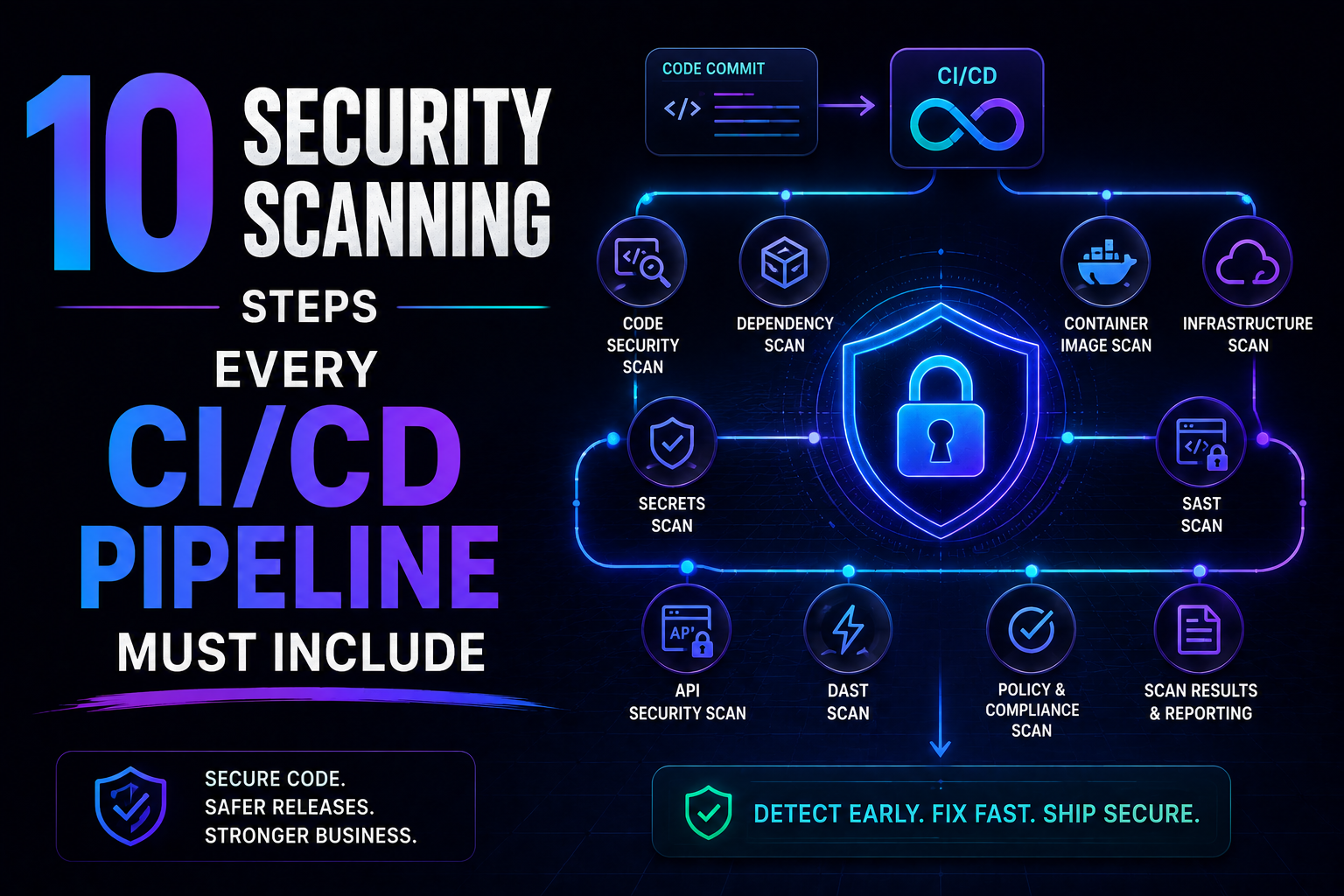
226SAST, SCA, container scanning, DAST, runtime verification – 10 security steps every CI/CD pipeline needs in 2026. Open source tools, real examples, and a rollout timeline. Stop shipping vulnerabilities.