The "GitOps" vs "AIOps" Debate: Which One Actually Saves Time?
GitOps promises declarative infrastructure. AIOps promises intelligent automation. Fredsazy compares both — with real numbers on which one actually saves you time.

Two philosophies. Two promises. Both claim to make your infrastructure better. But when you actually measure time saved — not hype, not features, but actual hours back in your week — one comes out ahead. Here's the real comparison between GitOps and AIOps, and which one you should invest in first.
Let me settle a debate that keeps coming up.
I was on a call with a DevOps team last month. They were arguing about where to invest their next quarter.
Half wanted to double down on GitOps — more declarative configs, more automation through Git, everything as code.
The other half wanted to explore AIOps — using AI to detect anomalies, auto-remediate issues, and predict failures before they happen.
Both sides had good arguments. Both sides had passionate advocates.
Then someone asked the question that stopped the room: "Which one actually saves us time?"
Not which one is cooler. Not which one has better job security. Which one actually puts hours back in your week.
I've been tracking this across teams I've worked with. Here's what the data actually shows.
What GitOps Actually Does (And How Much Time It Saves)
Let me define GitOps simply: your infrastructure is defined in Git. Changes happen through pull requests. Automation applies them.
No SSH-ing into servers. No clicking around dashboards. No "who changed that last week?"
Just Git. Declarative configs. Automated sync.
Where GitOps saves time:
| Activity | Without GitOps | With GitOps | Time Saved |
|---|---|---|---|
| Rolling back a bad change | 20-30 min (find change, revert manually) | 2 min (git revert) |
~25 min |
| Auditing who changed what | 15-60 min (check logs, ask around) | 30 sec (git log) |
~30 min |
| Setting up a new environment | 2-4 hours (manual config, clickops) | 10-15 min (copy configs, sync) | ~2-3 hours |
| Disaster recovery | 1-2 hours (recreate from memory) | 5-10 min (reapply from Git) | ~1 hour |
The big one: Teams I've tracked typically save 5-10 hours per week after fully adopting GitOps. Not because GitOps is magic. Because it eliminates whole categories of work — auditing, rollback coordination, environment drift debugging.
Where GitOps doesn't help:
- Detecting problems you didn't know existed
- Responding to incidents faster than a human can type
- Root-causing weird, intermittent failures
GitOps makes your changes repeatable. It doesn't make your responses faster.
What AIOps Actually Does (And How Much Time It Saves)
Now let me define AIOps: using AI to monitor, detect, and respond to infrastructure issues automatically.
Anomaly detection. Log analysis. Root cause suggestion. Auto-remediation.
Where AIOps saves time:
| Activity | Without AIOps | With AIOps | Time Saved |
|---|---|---|---|
| Finding the root cause of an incident | 30-90 min (manual log grepping) | 2-5 min (AI correlation) | ~45 min |
| Detecting a problem before users notice | Hours (user reports first) | Real-time (anomaly detection) | Unquantifiable |
| Triage of alert noise | 1-2 hours/day (false positives) | 10-15 min/day (filtered) | ~1 hour/day |
| Post-incident analysis | 1-2 hours (manual timeline reconstruction) | 10-15 min (AI-generated summary) | ~1 hour |
The big one: Teams I've tracked typically save 3-7 hours per week after implementing AIOps. The biggest win is root cause analysis — AI can correlate across logs, metrics, and traces in seconds.
Where AIOps doesn't help:
- Making changes repeatable (that's GitOps)
- Auditing who changed what (that's GitOps)
- Disaster recovery (GitOps again)
AIOps makes your responses faster. It doesn't make your changes repeatable.
The Head-to-Head: Which One Saves More Time?
Let me put this plainly based on what I've seen.
| Metric | GitOps | AIOps |
|---|---|---|
| Average weekly time saved | 5-10 hours | 3-7 hours |
| Upfront setup effort | Medium (1-2 weeks) | High (2-4 weeks + tool selection) |
| Ongoing maintenance | Low (mostly just Git hygiene) | Medium (alert tuning, model updates) |
| ROI timeline | 1-2 months | 3-6 months |
| Risk of "useless" investment | Low | Medium (bad alerts = noise) |
The verdict from my observations: GitOps saves more time, faster, with less risk.
But here's the catch — they solve different problems. Comparing them directly is like comparing a wrench to a hammer. Different tools for different jobs.
The real answer is: you need both. But the order matters.
The Order That Actually Works
Here's what I recommend based on watching teams succeed and fail.
Phase 1: GitOps first (months 1-2)
Get your infrastructure in Git. Everything as code. Declarative configs. Automated sync.
Why first? Because AIOps works better when your infrastructure is consistent. If your environments drift, anomaly detection becomes impossible. "It's different" vs "it's broken" — AI can't tell the difference without a source of truth.
GitOps gives you that source of truth.
Phase 2: Observability (months 2-3)
Logs. Metrics. Traces. Structured. Consistent. Queryable.
AIOps needs data. Good data. If your logs are a mess, your AI will be a mess.
Phase 3: AIOps (months 3-6)
Now add anomaly detection. Root cause correlation. Automated suggestions.
By this point, your infrastructure is consistent and observable. The AI has something useful to work with.
The teams that fail try AIOps first. They have inconsistent environments and noisy logs. The AI flags everything. Nobody trusts it. The tool gets abandoned.
The teams that win start with GitOps. Then observability. Then AIOps. Each phase enables the next.
A Real Example I Watched
Team A (30-person DevOps, e-commerce):
-
Month 1-2: Implemented GitOps. All infrastructure in Git. Deployments through PRs.
-
Result: Rollback time went from 25 minutes to 2 minutes. Environment drift disappeared.
-
Month 3: Added structured logging and consistent metrics.
-
Result: Could actually query across services. No more "which log file?" hunting.
-
Month 4-5: Added AIOps for anomaly detection and root cause correlation.
-
Result: MTTR (mean time to resolve) dropped from 45 minutes to 18 minutes.
Total time saved per engineer per week: ~12 hours. (~8 from GitOps + ~4 from AIOps)
They didn't pick one. They sequenced them correctly.
The Trap Most Teams Fall Into
Here's what I see over and over.
A team buys an AIOps tool. They spend weeks configuring it. It generates hundreds of alerts. Most are irrelevant because the infrastructure has baseline drift (which GitOps would have fixed).
The team ignores the alerts. The tool becomes shelfware. The team concludes "AIOps doesn't work."
That's not AIOps failing. That's skipping GitOps failing.
The other trap: a team does GitOps perfectly, then stops. They have repeatable changes but slow incident response. They're leaving time on the table.
You need both. In the right order.
The Bottom Line (For DevOps Leads)
Here's your decision framework.
If you have neither today:
Start with GitOps. It's lower risk, faster ROI, and enables everything else.
If you have GitOps but not AIOps:
You're ready. Add observability first, then AIOps. You'll see real time savings.
If you have AIOps but not GitOps:
You're putting the cart before the horse. Pause AIOps. Implement GitOps. Your AIOps tool will suddenly become useful.
If you have both and they're working:
Keep going. And track the time savings. Use it to justify headcount or new projects.
The Brand Takeaway
Here's what Fredsazy wants DevOps leads to remember:
"They don't chase hype. They sequence investments for actual time savings."
GitOps saves more time upfront. AIOps saves different time later. The winning path is GitOps → Observability → AIOps.
That's not opinion. That's what the data from real teams shows.
Now go look at your own stack. Which phase are you missing?
One Last Thing
Run this quick audit on your team this week:
- Can you roll back any change in under 5 minutes? (If no → GitOps gap)
- Can you find the root cause of any incident in under 20 minutes? (If no → Observability or AIOps gap)
- Do you trust your alerts? (If no → baseline drift or noise issue)
Answer honestly. Fix the biggest gap first.
That's how you actually save time.
Written by Fredsazy — because GitOps and AIOps aren't enemies. They're teammates in the right order.

Iria Fredrick Victor
Iria Fredrick Victor(aka Fredsazy) is a software developer, DevOps engineer, and entrepreneur. He writes about technology and business—drawing from his experience building systems, managing infrastructure, and shipping products. His work is guided by one question: "What actually works?" Instead of recycling news, Fredsazy tests tools, analyzes research, runs experiments, and shares the results—including the failures. His readers get actionable frameworks backed by real engineering experience, not theory.
Share this article:
Related posts
More from Devops
May 27, 2026
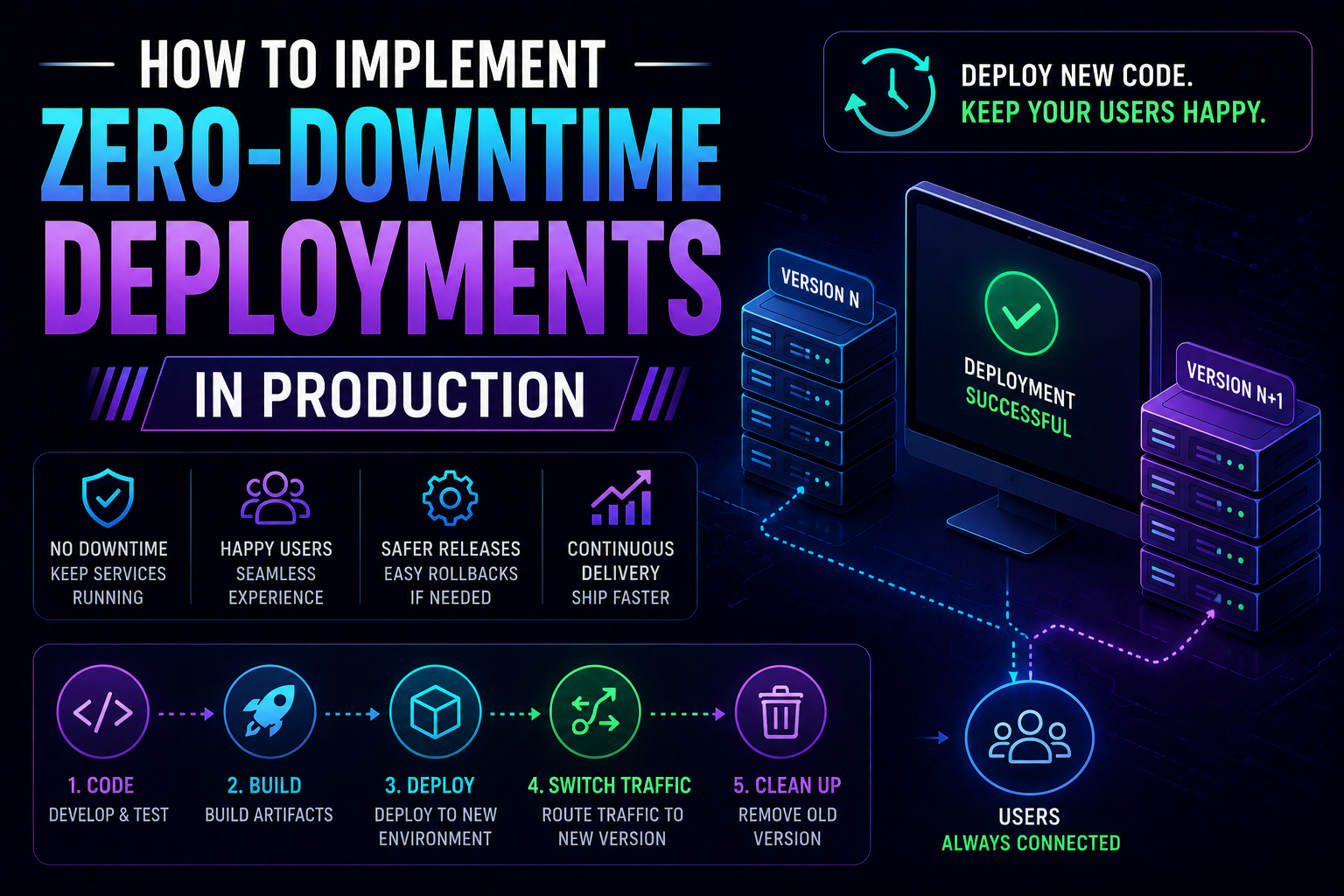
274Learn how to implement zero-downtime deployments in production — covering rolling updates, blue-green deployments, canary releases, feature flags, database migration patterns, graceful shutdown, and automated rollback with real Kubernetes YAML and code examples.
May 13, 2026
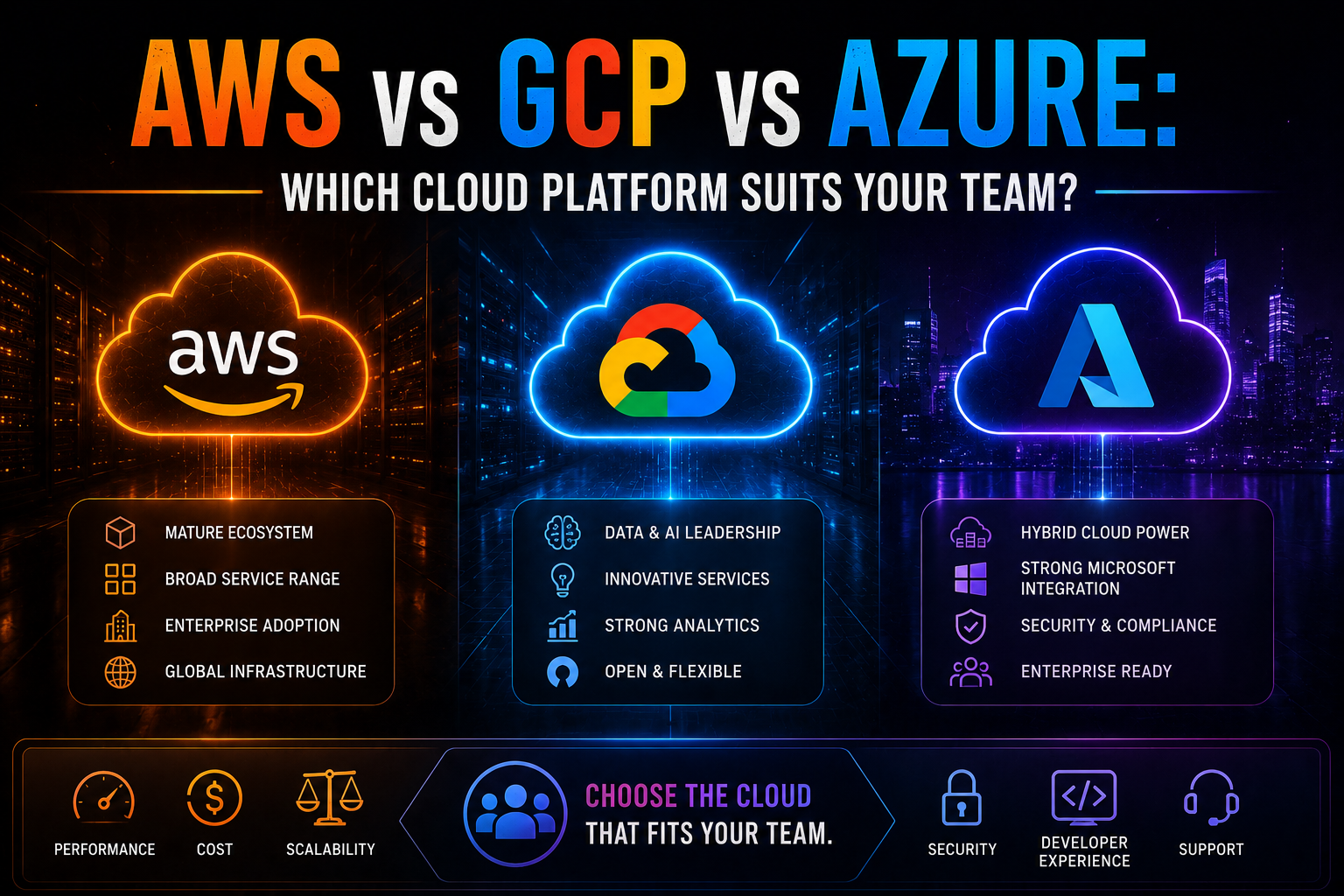
1052AWS vs Azure vs GCP in 2026 — an honest, vendor-neutral comparison covering market share, AI/ML tooling, pricing, Kubernetes, compliance, and which cloud platform suits your team's specific workload and ecosystem.
May 13, 2026
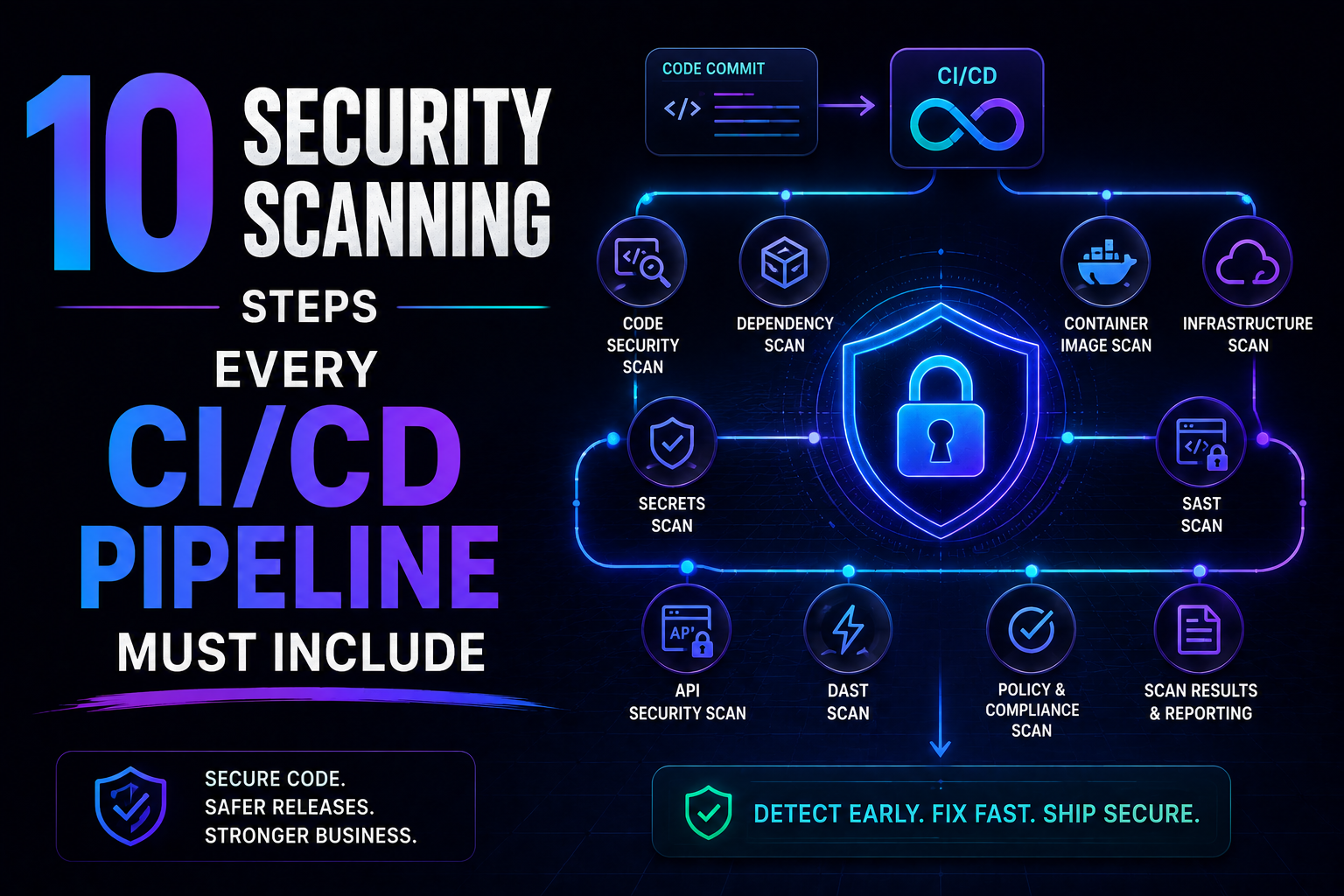
226SAST, SCA, container scanning, DAST, runtime verification – 10 security steps every CI/CD pipeline needs in 2026. Open source tools, real examples, and a rollout timeline. Stop shipping vulnerabilities.