Reasons Why Many Developers Are Confused and Stuck (And How to Pass That Phase)
Tutorial hell. Analysis paralysis. Imposter syndrome. Here's why you're stuck — and how to actually move forward.

The feeling you don't talk about.
You've been learning for months. Maybe a year.
You can follow tutorials. You understand the code when someone else writes it. You can explain concepts.
But when you sit down to build something on your own? Blank screen. Nothing.
You feel stupid. You feel behind. You wonder if everyone else has figured it out and you're the only one still stuck.
You're not alone. This happens to almost every developer. Multiple times.
I've been there. I've climbed out. Let me tell you why you're stuck — and how to actually get unstuck.
Reason 1: Tutorial Hell
You watch tutorials. You follow along. You type what the instructor types.
It feels like learning. It's not.
What's happening: You're memorizing keystrokes, not understanding concepts. When the tutorial ends, you have no map. Just a list of steps you followed.
Why it traps you: Tutorials feel productive. You're typing. Things are working. You get a dopamine hit when the code runs. But you haven't learned to navigate alone.
How to pass it:
Stop following tutorials line by line.
Watch a tutorial once. Don't type along. Just watch. Understand the goal.
Then close the tutorial. Try to build it yourself from memory.
When you get stuck, don't rewatch the whole thing. Search for the specific problem you're having.
Better yet: build something that's NOT in the tutorial. A small variation. Change the colors. Add a button. Remove a feature.
Tutorials teach you to copy. Building teaches you to think.
Reason 2: The Infinite Loop of "One More Thing"
You're learning JavaScript. But wait, you need to understand closures first. And to understand closures, you need to understand scope. And to understand scope, you need to understand execution context.
So you go deeper. And deeper. And never actually build anything.
What's happening: You've confused "learning everything" with "learning enough to start." You don't need to understand every corner of the language. You need to understand enough to build something small.
Why it traps you: The web is infinite. There's always one more concept. One more best practice. One more design pattern. You will never feel ready if you wait until you feel ready.
How to pass it:
Pick a ceiling. Decide: "I will learn X and then I will build something."
Not "learn everything about X." Just "learn enough to build a thing."
Build something that works. It doesn't have to be good. It just has to work.
Then learn the next thing. Build the next thing. Each time, you get better.
You don't learn to swim by reading about buoyancy. You learn by getting in the water and swallowing some.
Reason 3: The Blank Screen Paralysis
You have an idea. You open your editor. You stare at the cursor.
Where do you start? What file do you create first? What's the first line of code?
You don't know. So you close the editor. You go back to tutorials.
What's happening: You've never learned how to start. Tutorials always start with a pre-made setup. A starter file. An existing project. You've never built from absolute zero.
Why it traps you: Starting is a skill. It's different from following. And nobody teaches it.
How to pass it:
Start smaller. Not "build a Twitter clone." Start with "create a button that changes text when clicked."
That's one file. One HTML element. One line of JavaScript.
Get that working. Then add something. Then something else.
You don't climb a mountain by looking at the peak. You climb by taking one step. Then another.
Here's a trick: Write the worst version first. The ugliest. The most hardcoded. The thing you'd be embarrassed to show anyone.
Once it works, refactor it. Clean it up. Make it less embarrassing.
You can't refactor a blank screen. You can refactor bad code.
Reason 4: The Framework Maze
Should you learn React? Vue? Angular? Svelte?
What about backend? Node? Django? Rails? Go?
You ask ten developers. You get eleven opinions. So you freeze. You learn nothing because you can't decide what to learn.
What's happening: You're optimizing for the "best" choice instead of making a choice. There is no best. There's only "what works for this project."
Why it traps you: Every hour spent choosing a framework is an hour not building. The cost of picking the "wrong" framework is tiny compared to the cost of picking nothing.
How to pass it:
Pick one. Any one. Flip a coin if you have to.
Learn it for two weeks. Build something small.
Then ask yourself: "Do I hate this?" If yes, pick another one. If no, keep going.
You can switch later. You're not marrying the framework. You're just trying to build something.
The specific tool matters less than your ability to build things. A carpenter doesn't freeze over which hammer to use. They just hammer.
Reason 5: Imposter Syndrome (But Real)
You look at code on GitHub. You don't understand it. You think: "I'll never be that good."
You look at job postings. They ask for 5 years of experience in a framework that's 2 years old. You think: "I don't belong here."
What's happening: You're comparing your inside (confusion, doubt, struggle) to everyone else's outside (finished code, curated profiles, polished resumes).
Why it traps you: You believe everyone else has it figured out. They don't. Every developer, at every level, feels confused sometimes. The senior engineers just hide it better.
How to pass it:
Understand that confusion is not failure. Confusion is the feeling before understanding.
Every expert was once a beginner who didn't quit.
Stop comparing. The only useful comparison is you today vs you yesterday.
If you learned one thing yesterday, you're ahead. That's it.
Reason 6: No Feedback Loop
You write code. You don't know if it's good. You don't know if it's bad. You just... exist.
Without feedback, you can't improve. You make the same mistakes for months without knowing.
What's happening: You're learning in isolation. Tutorials give you positive feedback (it worked!). Real projects give you negative feedback (it broke!). You're getting neither.
Why it traps you: Feedback is how humans learn. Touch a hot stove? Pain. Don't touch again. Code is the same. No feedback, no learning.
How to pass it:
Get your code in front of other humans.
Post it on a forum. Ask for a code review. Join a Discord server. Find a mentor. Pair program with someone.
Scary? Yes. Worth it? Absolutely.
A single code review taught me more than a month of tutorials.
If you can't find a human, build something that gives you feedback automatically. Tests. Linters. Error messages. Anything that tells you "this is wrong" so you can fix it.
Reason 7: You're Not Building What You Care About
You're building to-do lists. Calculator apps. Blog tutorials.
You're bored. You're not invested. When you get stuck, you quit because you don't actually care if it works.
What's happening: You're building things that have no stakes. No personal meaning. No reason to finish.
Why it traps you: Passion is rocket fuel. Without it, you stall at the first obstacle.
How to pass it:
Build something you actually want.
A tool for your hobby. A website for your friend. A script that autominates a chore you hate.
When you care about the outcome, you'll fight through the hard parts. You'll Google at 11pm. You'll curse at your computer then keep going.
That persistence is how you get unstuck.
The Common Thread
All of these reasons share one thing: you're waiting for permission.
Permission to start before you're ready. Permission to write bad code. Permission to pick the "wrong" framework. Permission to be confused.
Nobody is coming to give you that permission. You have to give it to yourself.
How to Pass the Phase (The Short Version)
| Problem | Fix |
|---|---|
| Tutorial hell | Close the tutorial. Build from memory. |
| Learning everything | Set a ceiling. Build something small. |
| Blank screen | Write the worst version first. |
| Framework maze | Pick one. Any one. Build with it. |
| Imposter syndrome | Confusion is normal. Keep going. |
| No feedback | Share your code. Get a review. |
| No passion | Build something you actually care about |
One Last Thing
Every developer goes through this. Every single one.
The ones who get through it aren't smarter. They're not more talented. They just kept going when they felt stupid.
You're not stuck because you're bad at coding. You're stuck because you're in a phase. Phases pass.
Write the bad code. Build the ugly thing. Make the mistake. Learn from it.
That's not failure. That's the path.
Written by Fredsazy — because being confused means you're learning, not losing.

Iria Fredrick Victor
Iria Fredrick Victor(aka Fredsazy) is a software developer, DevOps engineer, and entrepreneur. He writes about technology and business—drawing from his experience building systems, managing infrastructure, and shipping products. His work is guided by one question: "What actually works?" Instead of recycling news, Fredsazy tests tools, analyzes research, runs experiments, and shares the results—including the failures. His readers get actionable frameworks backed by real engineering experience, not theory.
Share this article:
Related posts
More from Software
May 27, 2026
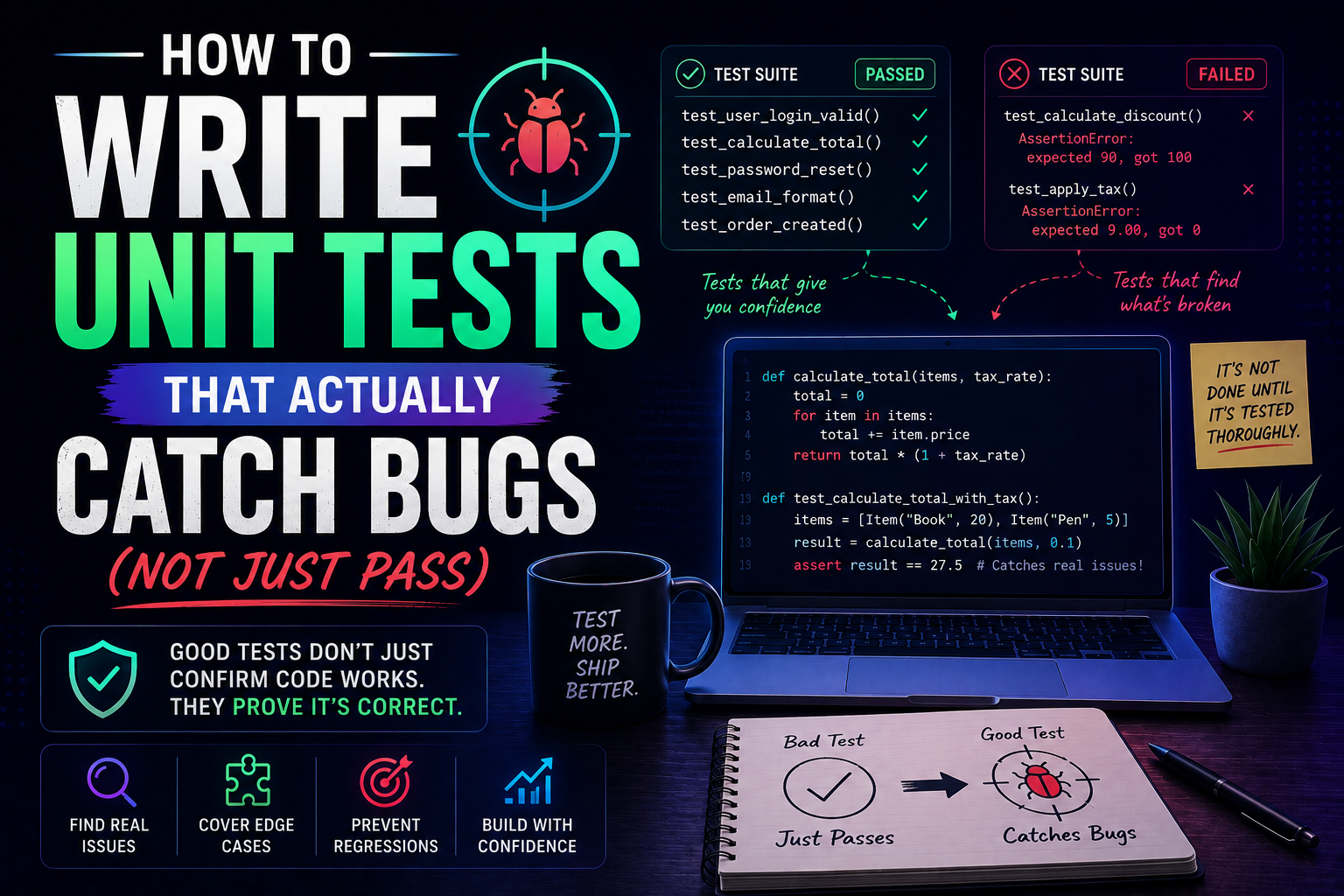
222Learn how to write unit tests that actually catch bugs — not just pass. Covers the AAA pattern, behaviour vs implementation testing, edge cases, test doubles, mutation testing, and a pre-commit checklist for writing tests that protect production.
May 22, 2026
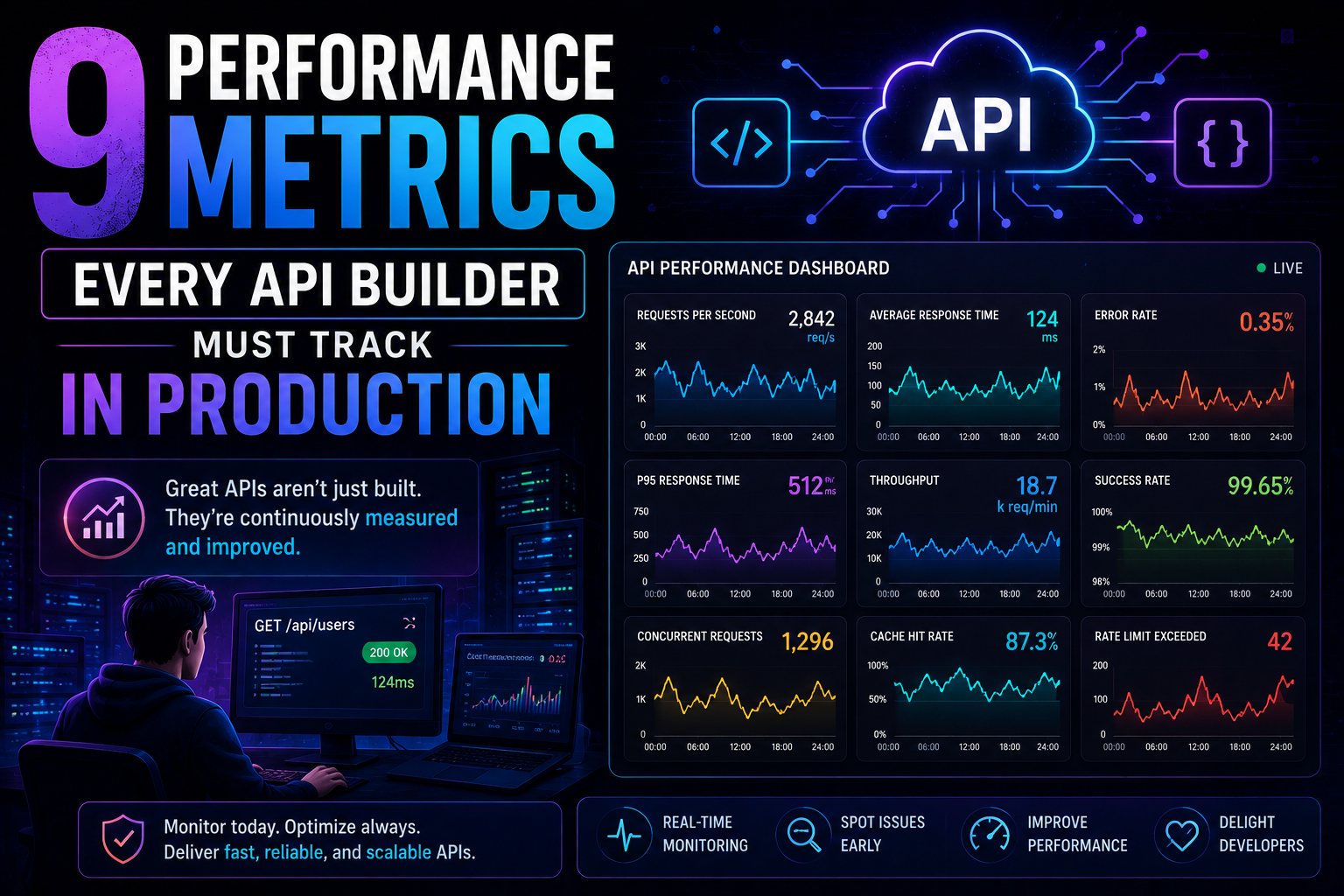
265Latency percentiles. Dependency health. Connection pool saturation. Idempotency success. 9 production metrics every API builder needs – with benchmarks, alert thresholds, and real-world failures prevented.
May 13, 2026
312PostgreSQL vs MongoDB in 2026 — an honest comparison covering benchmarks, data modelling, ACID transactions, scaling, pgvector vs Atlas Vector Search, pricing, and a decision framework for your project.