Why google is the best for rank than any other engines
Google dominates search for a reason. Here's what makes it better for ranking than Bing, DuckDuckGo, or anyone else.

You want traffic. Google has the traffic.
Bing has about 3% of the global search market. DuckDuckGo has about 0.5%. Yahoo is negligible. Yandex and Baidu are regional.
Google has over 90%.
If you rank #1 on Bing, maybe a few hundred people see your site per month. If you rank #1 on Google, thousands or millions.
But market share isn't the only reason Google is the best for ranking. Let me explain the others.
1. Google understands content better
Google processes billions of searches per day. It has been training its algorithms for over 20 years.
Bing uses some of the same technology. DuckDuckGo mostly pulls from Bing. Everyone else is far behind.
Google understands:
- Synonyms (car = automobile = vehicle)
- Search intent (does "apple" mean fruit or company?)
- Local context (pizza near me knows your location)
- Freshness (news results appear within minutes)
- Entities (people, places, things, not just keywords)
Other search engines are getting better. But Google is a decade ahead.
2. Google rewards quality more consistently
Google's algorithm (PageRank, then countless updates like Panda, Penguin, Hummingbird, RankBrain) is designed to find high-quality, relevant content.
Bing is easier to manipulate. Keyword stuffing works better on Bing. Thin content ranks on Bing more often.
Why? Bing has less data to train its algorithms. Less data means worse detection of spam and low quality.
If you build a genuinely good site, Google will reward you. Other engines might not even notice.
3. Google indexes more of the web
Google's crawler (Googlebot) is everywhere. It finds pages other engines miss.
Bing crawls less aggressively. If your site is new or has no backlinks, Bing might not find it for months.
DuckDuckGo doesn't crawl at all. It uses Bing's index.
Yandex focuses on Russia. Baidu focuses on China. If your audience isn't there, neither engine matters.
Google indexes deep. It finds pages buried in subfolders. It finds pages with no backlinks. It finds pages on slow, obscure servers.
4. Google updates faster
Publish a new page. Google often indexes it within hours (days at worst).
Bing? Weeks sometimes.
Google also updates rankings continuously. If you improve your content, Google notices faster.
Other engines batch updates. Once a week. Once a month. Your improvements sit unnoticed.
5. Google provides better tools
Google Search Console tells you:
- Which pages are indexed
- Which keywords you rank for
- Which sites link to you
- Which pages have errors
- How users find you
Bing Webmaster Tools exists. It's fine. It's not Google.
DuckDuckGo has no webmaster tools. Yandex and Baidu have tools in Russian and Chinese.
You cannot improve your ranking effectively if you cannot measure it. Google gives you the data.
6. Google handles technical SEO better
JavaScript rendering? Google does it. (Bing struggles.)
Mobile-first indexing? Google prioritized it years ago. (Bing still favors desktop.)
Core Web Vitals? Google measures user experience directly. (Others don't care as much.)
Structured data (schema markup)? Google reads it, uses it for rich snippets, and rewards it. Bing supports some of it. Others barely try.
If you do technical SEO correctly, Google sees it. Other engines might ignore it.
7. Google's user base self-reinforces
More users → more data → better algorithms → better results → more users.
It's a flywheel. Google has been spinning it for two decades.
Bing cannot catch up because it doesn't have the user volume. DuckDuckGo cannot catch up because it relies on Bing.
Google is the best for ranking because Google is where the users are. And users stay because Google gives good results.
What about other engines?
Bing: Good for older demographics (default on some corporate laptops). Worth optimizing if you have extra time. Not worth prioritizing over Google.
DuckDuckGo: Privacy-focused. Same index as Bing. No tracking means less data for relevance. Good for privacy. Bad for ranking signal.
Yandex: Only matters for Russian audience. Baidu: Only matters for Chinese audience. Yahoo: Uses Bing. Irrelevant.
The bottom line
| Engine | Market share | Index size | Update speed | Tools | Worth optimizing? |
|---|---|---|---|---|---|
| 90%+ | Largest | Fastest | Best | Yes (priority) | |
| Bing | ~3% | Smaller | Slow | Mediocre | Maybe (if time) |
| DuckDuckGo | ~0.5% | Bing's index | Slow | None | No |
| Yandex | Regional | Regional | Unknown | Russian | Only for Russia |
| Baidu | Regional | Regional | Unknown | Chinese | Only for China |
One last thing
Focus on Google first. Get your rankings there. Traffic from other engines will be a bonus.
But don't ignore Bing entirely. It's easy to optimize for both. Most SEO best practices (quality content, clean structure, fast loading) help everywhere.
The difference is priority. Spend 90% of your SEO energy on Google. 10% on everything else.
That's where the traffic is.
Written by Fredsazy — because ranking where nobody searches is still nobody finding you.

Iria Fredrick Victor
Iria Fredrick Victor(aka Fredsazy) is a software developer, DevOps engineer, and entrepreneur. He writes about technology and business—drawing from his experience building systems, managing infrastructure, and shipping products. His work is guided by one question: "What actually works?" Instead of recycling news, Fredsazy tests tools, analyzes research, runs experiments, and shares the results—including the failures. His readers get actionable frameworks backed by real engineering experience, not theory.
Share this article:
Related posts
More from Software
May 27, 2026
224Learn how to write unit tests that actually catch bugs — not just pass. Covers the AAA pattern, behaviour vs implementation testing, edge cases, test doubles, mutation testing, and a pre-commit checklist for writing tests that protect production.

May 22, 2026
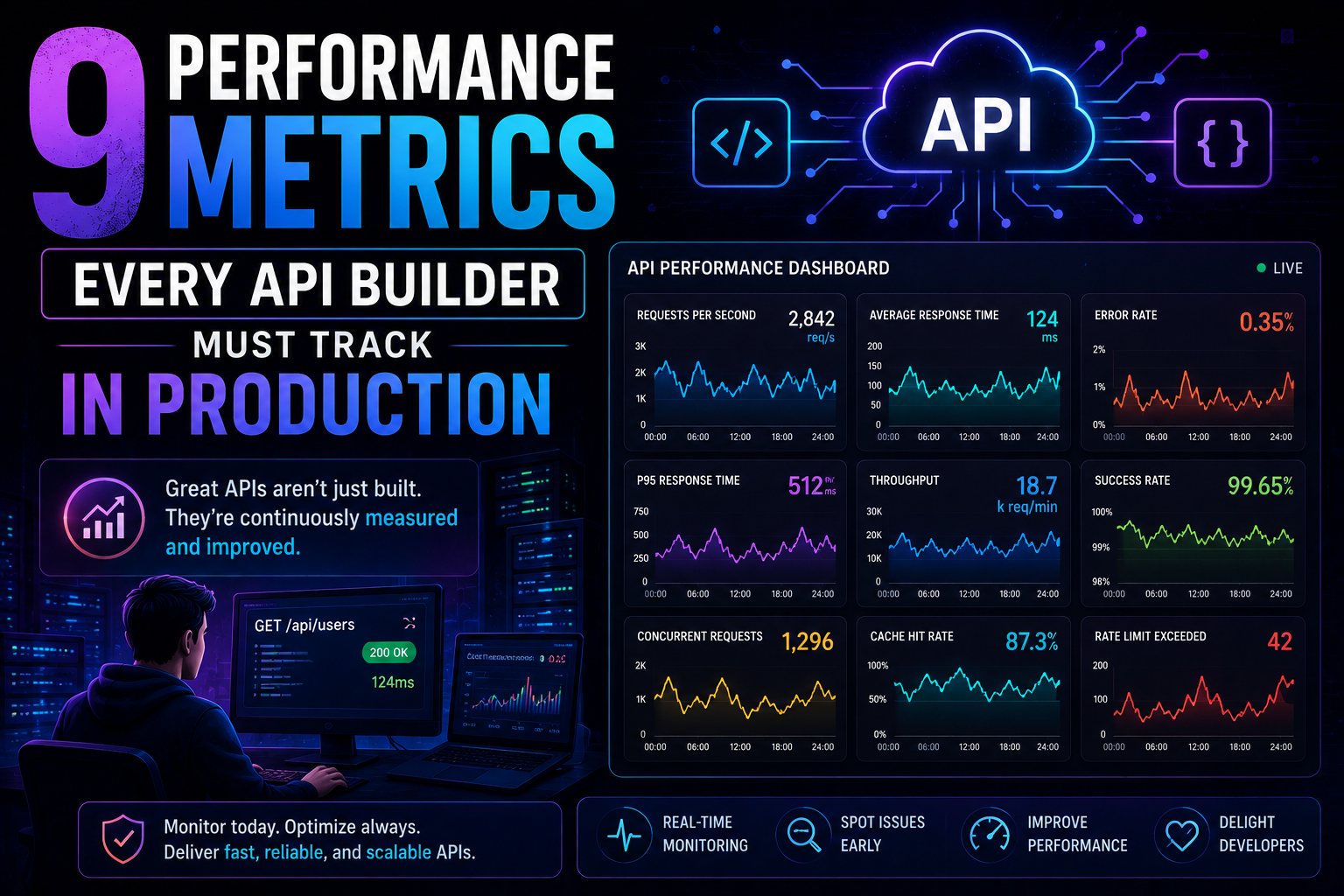
266Latency percentiles. Dependency health. Connection pool saturation. Idempotency success. 9 production metrics every API builder needs – with benchmarks, alert thresholds, and real-world failures prevented.
May 13, 2026
313PostgreSQL vs MongoDB in 2026 — an honest comparison covering benchmarks, data modelling, ACID transactions, scaling, pgvector vs Atlas Vector Search, pricing, and a decision framework for your project.