Important for developers to prioritize their mental health
Burnout, anxiety, exhaustion. Developer mental health is worse than most people realize. Here's why it matters and what you can actually do about it.

Nobody told me this job would break me.
I thought I had it good. Good salary. Remote work. Flexible hours. Interesting problems.
But two years in, I couldn't sleep. My back hurt constantly. I snapped at my family for no reason. I felt guilty when I wasn't coding. I felt anxious when I was.
I thought I was weak. I wasn't. I was just a developer.
The job is harder on your brain than anyone admits.
Why developer mental health is uniquely bad
It's not just "stress." Every job has stress.
Developer stress is different.
Constant context switching. You're deep in code. Interruption. Ten minutes to recover. Another interruption. Your brain never rests.
Impossible estimates. Someone always wants it faster. You always feel behind. Even when you're working hard, you feel like you're failing.
Imposter syndrome. Everyone else seems to know more. Every pull request feels like a judgment. You worry they'll discover you don't actually know what you're doing.
On-call rotations. Woken up at 3 AM because a server crashed. Can't fall back asleep. Go to work exhausted.
Blindness to hours. You look up. It's dark outside. You've been sitting for eight hours straight. You forgot to eat lunch. You didn't move.
Isolation. Remote work means no coworkers to notice you're struggling. You're alone with your thoughts. That's dangerous.
The numbers are terrifying
Studies show:
- 42% of developers report burnout
- 58% experience anxiety related to work
- 1 in 10 developers has considered suicide
- Average developer works 52 hours per week (unpaid overtime)
- Most developers do not use their full vacation time
These are not weak people. These are people in a broken system.
Burnout doesn't happen suddenly
It creeps up.
First, you feel tired. Normal tired.
Then you feel detached. Work doesn't excite you anymore. It's just tasks.
Then you feel ineffective. Nothing you do is good enough. You stop caring.
Then you break.
You can't focus. You make stupid mistakes. You dread opening your laptop. You feel nothing.
Burnout is not a badge of honor. It's a medical condition. Treat it that way.
What actually helps (from someone who crashed)
I burned out. Badly. Couldn't write a line of code for two months. Thought my career was over.
Here's what brought me back.
1. Set hard working hours
I stop at 6 PM. No exceptions. Not "just one more commit." Not "let me finish this thought."
When 6 PM hits, laptop closes. Work doesn't exist until tomorrow morning.
Your brain needs rest. Rest means no work. Not less work. No work.
2. Take your vacation days
All of them. Not "working vacation." Not "checking email from the beach."
Real vacation. Out of office turned on. Slack deleted from phone.
You are not that important. The company survived before you. It will survive for one week.
3. Say no more often
Another feature. Another meeting. Another late night request.
"No."
That's a complete sentence. You don't need to explain. You don't need to justify.
Your capacity is limited. Protect it.
4. Stop checking work messages at home
No Slack on your phone. No email notifications after hours.
If something is actually an emergency, they will call you. They won't. Most "emergencies" can wait until morning.
5. Move your body
You sit all day. Your body is deteriorating. Your brain is deteriorating with it.
Walk. Stretch. Lift something heavy. Do it every day. Even 15 minutes changes everything.
6. Talk to someone
A therapist. A friend. Another developer who gets it.
Say the words out loud: "I am struggling."
It feels impossible. Do it anyway. The relief is instant.
7. Separate your worth from your work
You are not your code. You are not your productivity. You are not your GitHub streak.
Code can be rewritten. Features can be delayed. Bugs can be fixed.
You cannot be replaced. You matter more than any project.
What managers and teams should do
If you lead developers, this is your responsibility.
Stop glorifying overtime. The developer who stays late is not a hero. They are a burnout risk.
Realistic estimates. Double whatever the engineer said. Then add buffer. Then deliver.
No on-call without recovery. If someone is woken up at 3 AM, they don't work normal hours the next day. Period.
Check in honestly. "How are you?" isn't enough. Ask "How is your mental health this week?" Create space for real answers.
Model good behavior. Take your own vacation. Leave on time. Say no. Your team will follow.
Red flags to watch for in yourself
Stop ignoring these:
- You can't remember what you did yesterday
- You're making mistakes on simple tasks
- You feel nothing when you ship something good
- You're irritable with everyone
- You're working more but accomplishing less
- You dread Monday morning
- You're not enjoying things you used to love
These are not normal. These are warnings.
What to do if you're already burned out
Step 1: Stop working. Today. Now. Not "after this task." Now.
Step 2: Tell someone. Your manager. A coworker. Your partner. Say the words.
Step 3: See a doctor. Burnout is real. Get professional help.
Step 4: Rest. Real rest. No screens. No guilt. Just rest.
Step 5: Come back slowly. Half days. Easy tasks. No pressure.
Burnout recovery takes weeks or months. That's normal. Don't rush it.
The bottom line
Your mental health is not optional. It's not something to optimize later. It's not something to sacrifice for a deadline.
You are a human. Not a machine.
The code will be there tomorrow. The bugs will still exist. The features can wait.
You cannot wait. Take care of yourself first.
Written by Fredsazy — because broken developers ship broken code, and you deserve better than broken.

Iria Fredrick Victor
Iria Fredrick Victor(aka Fredsazy) is a software developer, DevOps engineer, and entrepreneur. He writes about technology and business—drawing from his experience building systems, managing infrastructure, and shipping products. His work is guided by one question: "What actually works?" Instead of recycling news, Fredsazy tests tools, analyzes research, runs experiments, and shares the results—including the failures. His readers get actionable frameworks backed by real engineering experience, not theory.
Share this article:
Related posts
More from Software
May 27, 2026
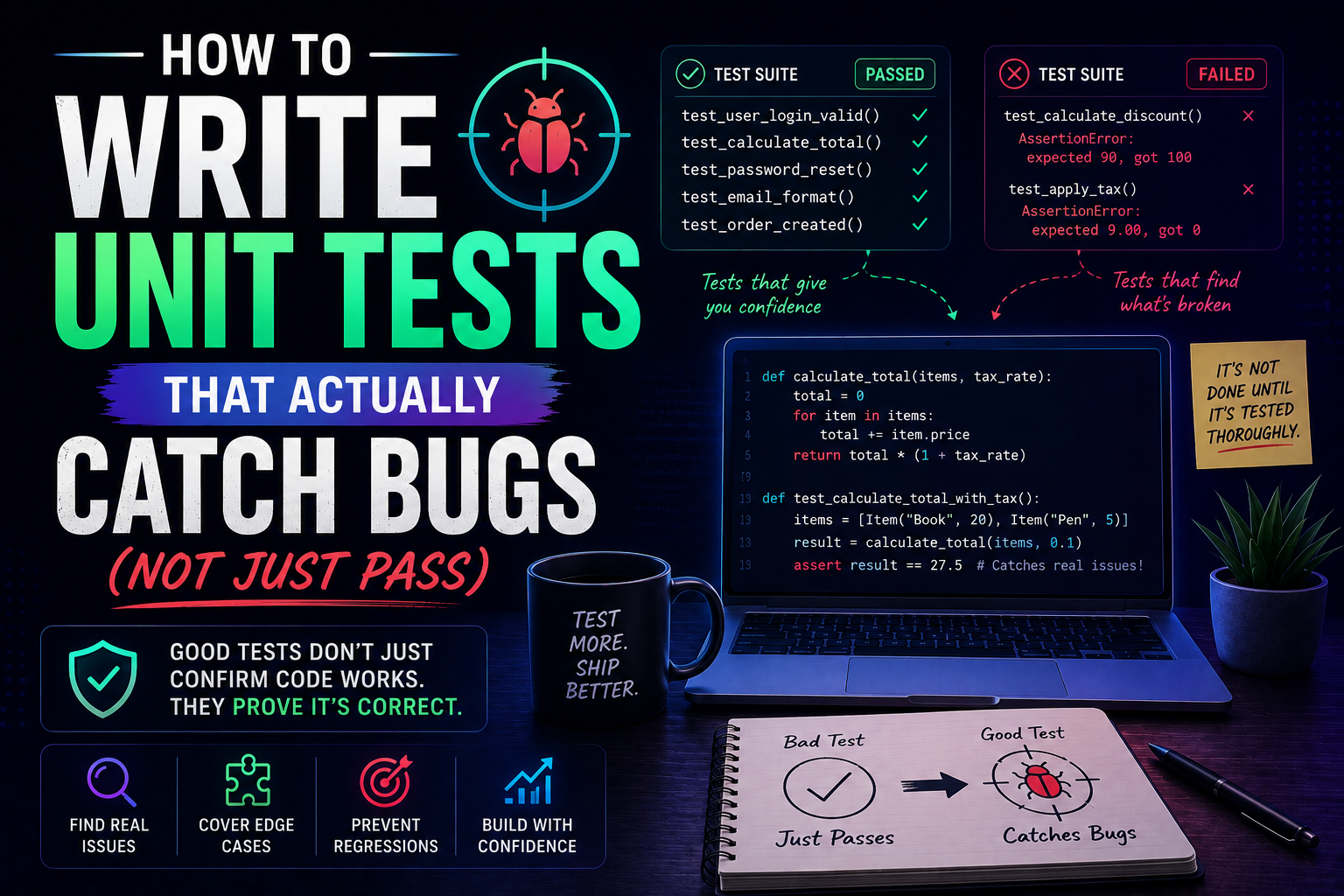
224Learn how to write unit tests that actually catch bugs — not just pass. Covers the AAA pattern, behaviour vs implementation testing, edge cases, test doubles, mutation testing, and a pre-commit checklist for writing tests that protect production.
May 22, 2026
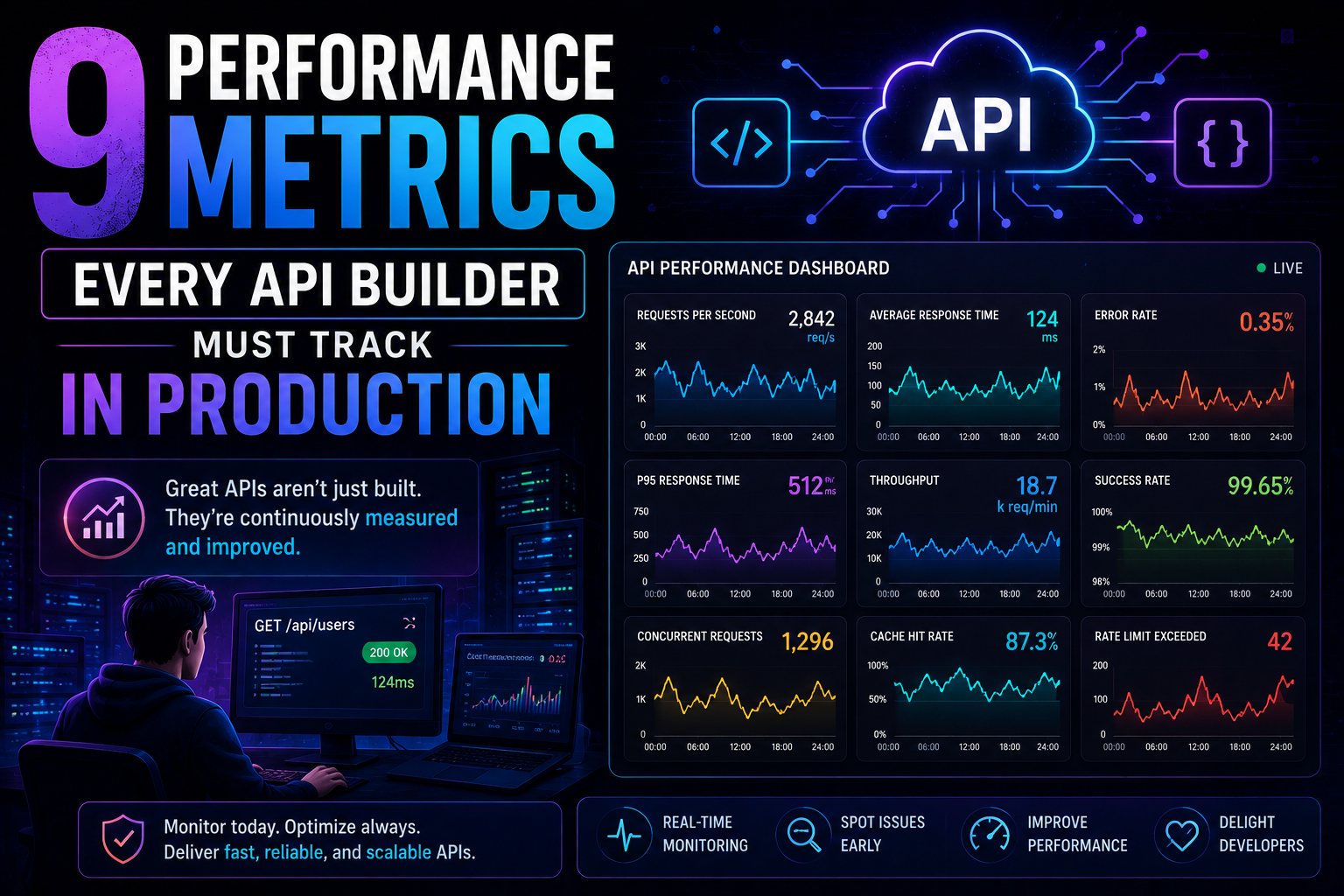
266Latency percentiles. Dependency health. Connection pool saturation. Idempotency success. 9 production metrics every API builder needs – with benchmarks, alert thresholds, and real-world failures prevented.
May 13, 2026
313PostgreSQL vs MongoDB in 2026 — an honest comparison covering benchmarks, data modelling, ACID transactions, scaling, pgvector vs Atlas Vector Search, pricing, and a decision framework for your project.