Why AI Can't Think the Same Output as You (And Why That's Actually Your Problem)
AI doesn't sound like you because you haven't taught it to. Here's the real reason — and how to fix it.

The frustration I hear.
"I prompt and prompt. It never sounds like me."
"The tone is wrong. The examples are generic. It doesn't get my sense of humor."
"I spend more time editing than I would have just writing it myself."
I've heard this from dozens of people. I've felt it myself.
Here's the truth nobody tells you: AI doesn't sound like you because you haven't taught it to.
Not because AI is bad. Because you're assuming it already knows you. It doesn't.
The Assumption That Breaks Everything
You open a chat. You type a prompt. You expect the AI to understand your voice.
Why?
The AI has never met you. It doesn't know your favorite phrases. It doesn't know your pet peeves. It doesn't know the inside jokes you share with your audience.
It knows average. It knows common. It knows what most people sound like.
You don't sound like most people. You sound like you.
That's not a bug. That's the entire point of having a voice.
Why "Write Like Me" Doesn't Work
You've tried this prompt:
"Write this in my voice."
The AI guesses. It guesses wrong.
Because it doesn't have enough information. You gave it one sentence. That's not enough to model a human voice.
Here's what the AI needs to sound like you:
Examples of your writing. Not one. Many. Paragraphs. Articles. Emails. Tweets. Show it what you've written before.
Rules about your style. Short sentences or long? Formal or casual? Jokes or serious? Stories first or facts first?
Things you hate. Clichés you never use. Words you'd never say. Patterns you avoid.
Things you love. Catchphrases. Storytelling habits. Specific ways you transition between ideas.
Without these, the AI is shooting in the dark.
How I Actually Fixed This For Myself
I stopped asking AI to "sound like me." I started showing it what me sounds like.
Here's the exact process I used.
Step 1: I collected my own writing.
Ten articles. Twenty emails. A hundred tweets. Anything I'd written that felt like me.
Step 2: I asked the AI to analyze my voice.
I pasted my writing into the chat and said:
"Analyze my writing voice. List 10 characteristics. Include sentence length, word choice, humor style, paragraph structure, and any patterns you notice."
The AI gave me a list. Some of it was wrong. I corrected it.
Step 3: I created a "voice guide."
I turned that analysis into a prompt I could reuse:
"You are now writing in the voice of [Your Name]. Here are the rules of my voice:
- Use short sentences. 10-15 words on average.
- Start with stories, not facts.
- Use 'I' and 'you.' Write like a conversation.
- Never use 'in today's world' or 'unlock your potential.'
- Be direct. No fluff.
- Humor is dry and understated. No exclamation points.
- Break rules intentionally for emphasis.
Now write the following in my voice:"
Step 4: I iterated.
First output was okay. Second was better. Fifth was good. Every time I corrected it, the AI learned.
Now I can paste that voice guide before any prompt. The output sounds like me. Not perfect. But close.
The Real Problem (It's Not the AI)
Here's the hard truth I had to accept.
The problem wasn't the AI. The problem was me assuming the AI should already know me.
I was asking for "write like me" without giving it anything to work with.
That's like hiring a ghostwriter, handing them a blank notebook, and saying "make it sound like me."
A real ghostwriter would ask for samples. They'd interview you. They'd learn your voice over weeks.
AI can learn it in minutes. But you have to teach it.
What You Can Do Today
Stop being frustrated. Start teaching.
Step 1: Find 3-5 examples of your best writing. Things that feel undeniably you.
Step 2: Paste them into ChatGPT. Ask: "Analyze my writing voice. Give me a detailed description."
Step 3: Take that description. Turn it into a "voice guide" prompt. Add corrections where the AI got it wrong.
Step 4: Before every new task, paste your voice guide. Then give your actual prompt.
Step 5: When the output isn't right, correct it. "That's too formal. Make it shorter. Remove that word."
Each correction teaches the AI. Over time, it learns you.
The One Sentence That Changed Everything
Someone told me this and it clicked:
"The AI isn't bad at sounding like you. You're bad at explaining what you sound like."
Harsh. True.
I couldn't explain my own voice to another human in 30 seconds. Why did I expect AI to understand it instantly?
Once I accepted that I needed to teach my voice, everything changed.
The Bottom Line
AI doesn't sound like you because you haven't shown it what you sound like.
That's not AI's fault. That's not your fault. It's just how the technology works.
You have two choices:
- Keep being frustrated that AI doesn't magically know you
- Spend 20 minutes teaching it
One of those works. The other doesn't.
Written by Fredsazy — after learning that AI needs teachers, not critics.

Iria Fredrick Victor
Iria Fredrick Victor(aka Fredsazy) is a software developer, DevOps engineer, and entrepreneur. He writes about technology and business—drawing from his experience building systems, managing infrastructure, and shipping products. His work is guided by one question: "What actually works?" Instead of recycling news, Fredsazy tests tools, analyzes research, runs experiments, and shares the results—including the failures. His readers get actionable frameworks backed by real engineering experience, not theory.
Share this article:
Related posts
More from AI
May 27, 2026
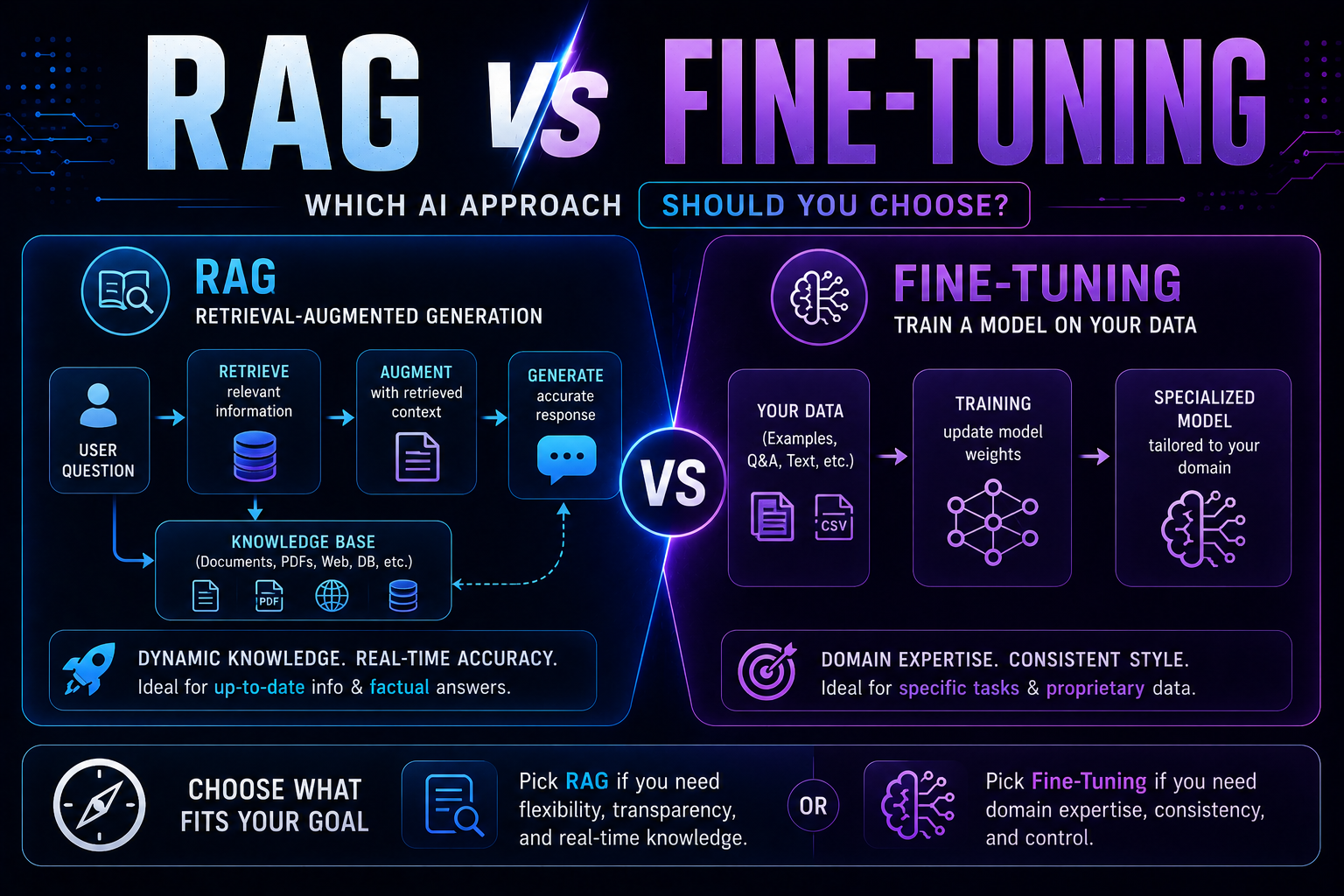
207RAG vs fine-tuning in 2026 — a practical guide covering when to use each, how both work with real code examples, the form vs facts distinction, hybrid approaches, true costs, and a decision framework to choose the right AI architecture for your use case.
May 22, 2026
2075 red flags every business must spot before buying AI software — covering demo manipulation, data privacy gaps, missing error handling, AI-washing, and lock-in contracts, with a 4-week vendor evaluation framework.

May 13, 2026
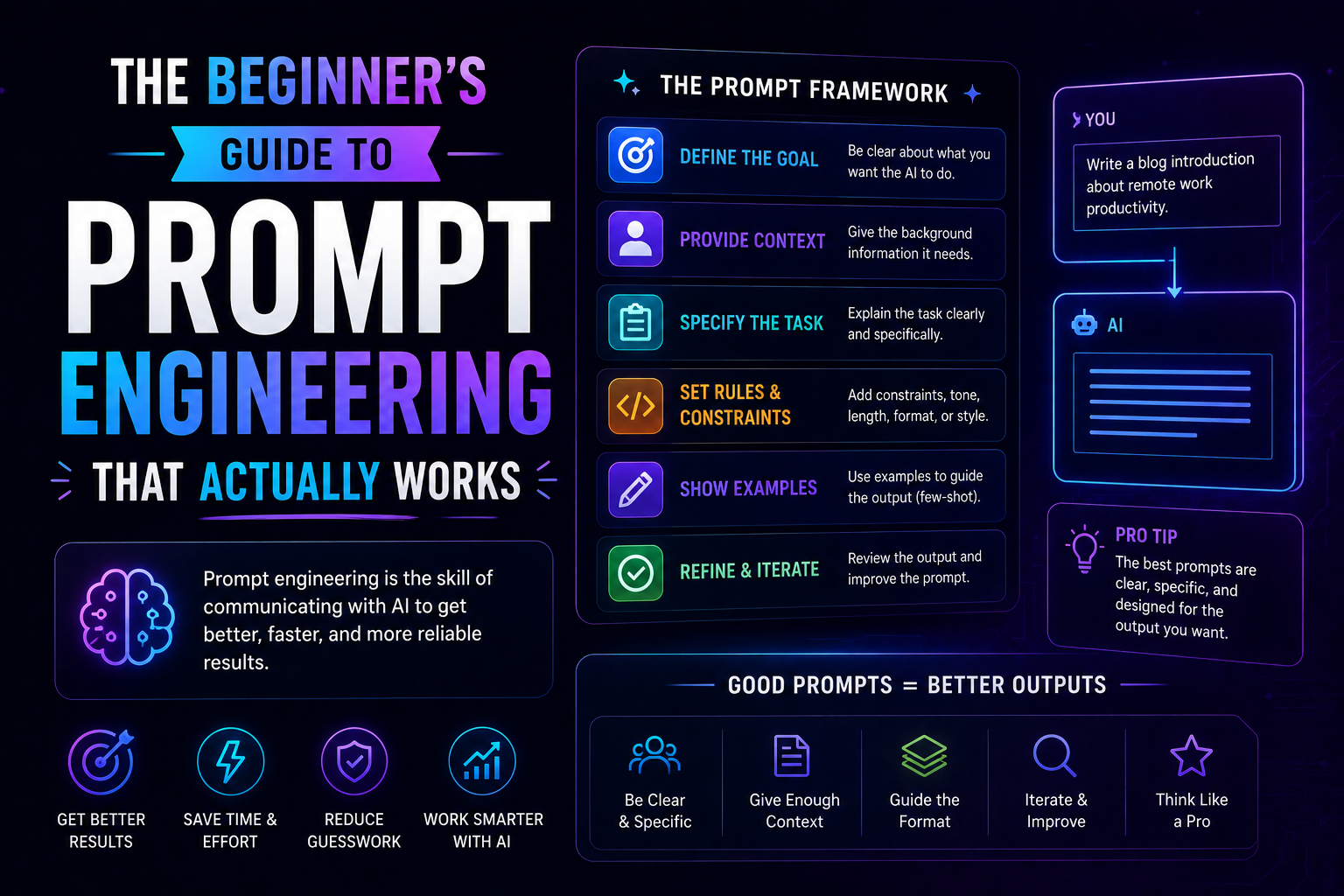
1160The beginner's guide to prompt engineering that actually works in 2026 — covering the RCTF framework, chain of thought, few-shot examples, output contracts, and model-specific tips for Claude, GPT-5, and Gemini.