The reasons why you think ai is taking all setup
Feeling like AI is taking over? Here are the real reasons it feels that way — and why you're not wrong.
You're not imagining it.
Every day, a new AI tool launches. Writes code. Designs logos. Answers emails. Writes reports.
It feels like AI is taking everything. Your job. Your industry. Your sense of purpose.
Let me tell you why it feels that way. And why some of your fear is justified.
Reason 1: AI is faster at repetitive tasks
This is the obvious one.
A human takes 30 minutes to write a standard email. AI takes 10 seconds.
A human takes an hour to write a basic function. AI takes 30 seconds.
A human takes a day to sort through hundreds of documents. AI takes minutes.
When you see AI do in seconds what takes you hours, it feels like replacement. But it's not replacement. It's automation of the repetitive.
The problem is: many jobs are mostly repetitive.
Reason 2: AI is getting better, fast
Six months ago, AI couldn't do certain things. Now it can.
Twelve months ago, AI was barely useful. Now it's part of daily work.
The rate of improvement is terrifying. What AI struggles with today, it might master tomorrow.
This speed creates anxiety. You can't plan for a future that changes every month.
Reason 3: Companies are excited about cost savings
AI doesn't get sick. Doesn't take vacation. Doesn't ask for a raise. Works 24/7.
From a business perspective, that's irresistible.
Managers are not evil. They just have budgets. If AI can do the work of three people for the cost of one subscription, they will use it.
It's not personal. It's math.
Reason 4: The hype is everywhere
Every news article. Every LinkedIn post. Every conference.
"AI will replace developers." "AI will replace writers." "AI will replace designers."
You can't escape it. The constant messaging wears you down.
Even if the reality is more nuanced, the headlines feel absolute. And enough people believe them that companies start acting on them.
Reason 5: Your job already changed
You used to write everything from scratch. Now you edit AI drafts.
You used to debug manually. Now you paste errors into chat.
You used to research for hours. Now you ask an AI for summaries.
The work is different. The skills are different. The feeling of being displaced is real, even if you still have a job.
Reason 6: Entry-level work is disappearing
Junior roles are shrinking.
Why hire a junior writer when AI can draft? Why hire a junior coder when AI can generate? Why hire a junior designer when AI can mock up?
Companies want seniors who can review, refine, and direct AI output. Juniors who need training and make mistakes are expensive.
This is new. And it's scary for anyone starting their career.
Reason 7: You see the failures, but companies see the potential
You know AI messes up. You've seen the hallucinations. The confident wrong answers. The bugs.
Companies see the cost savings. They see 80% good enough as a win. They see the future, not the present.
By the time AI is actually reliable, the decisions will have already been made.
But here's what's actually happening
AI is not taking all jobs. It's taking some tasks from most jobs.
Repetitive, formulaic, pattern-based work is going away. Creative, judgment-based, relationship-based work is becoming more valuable.
You're not being replaced. You're being upgraded. But upgrades are uncomfortable.
The jobs most at risk
- Simple data entry
- Basic customer support scripts
- Template-based writing
- Standard code generation
- Routine image creation
- Translation of simple text
If your job is 100% these things, yes, you should worry.
The jobs safest from AI
- Strategic decision making
- Complex problem solving
- Relationship management
- Creative direction
- Ethical judgment
- Hands-on physical work (for now)
If your job involves decisions, relationships, or judgment, you're safer than you think.
What you should do about it
Stop panicking. Start adapting.
Learn to use AI as a tool, not a threat. Use it to handle repetitive tasks so you can focus on harder ones.
Develop skills AI doesn't have: judgment, taste, relationships, context.
Stay human. That's your advantage.
The bottom line
You're not wrong to feel uneasy. AI is changing work faster than any technology before it.
But "taking all jobs" is not the same as "changing all jobs."
Your job will look different in five years. You might still be doing it. You'll just do it differently.
Stop waiting to see what happens. Learn AI. Use AI. Stay valuable.
Written by Fredsazy — because fear is useful only if it makes you move.

Iria Fredrick Victor
Iria Fredrick Victor(aka Fredsazy) is a software developer, DevOps engineer, and entrepreneur. He writes about technology and business—drawing from his experience building systems, managing infrastructure, and shipping products. His work is guided by one question: "What actually works?" Instead of recycling news, Fredsazy tests tools, analyzes research, runs experiments, and shares the results—including the failures. His readers get actionable frameworks backed by real engineering experience, not theory.
Share this article:
Related posts
More from AI
May 27, 2026
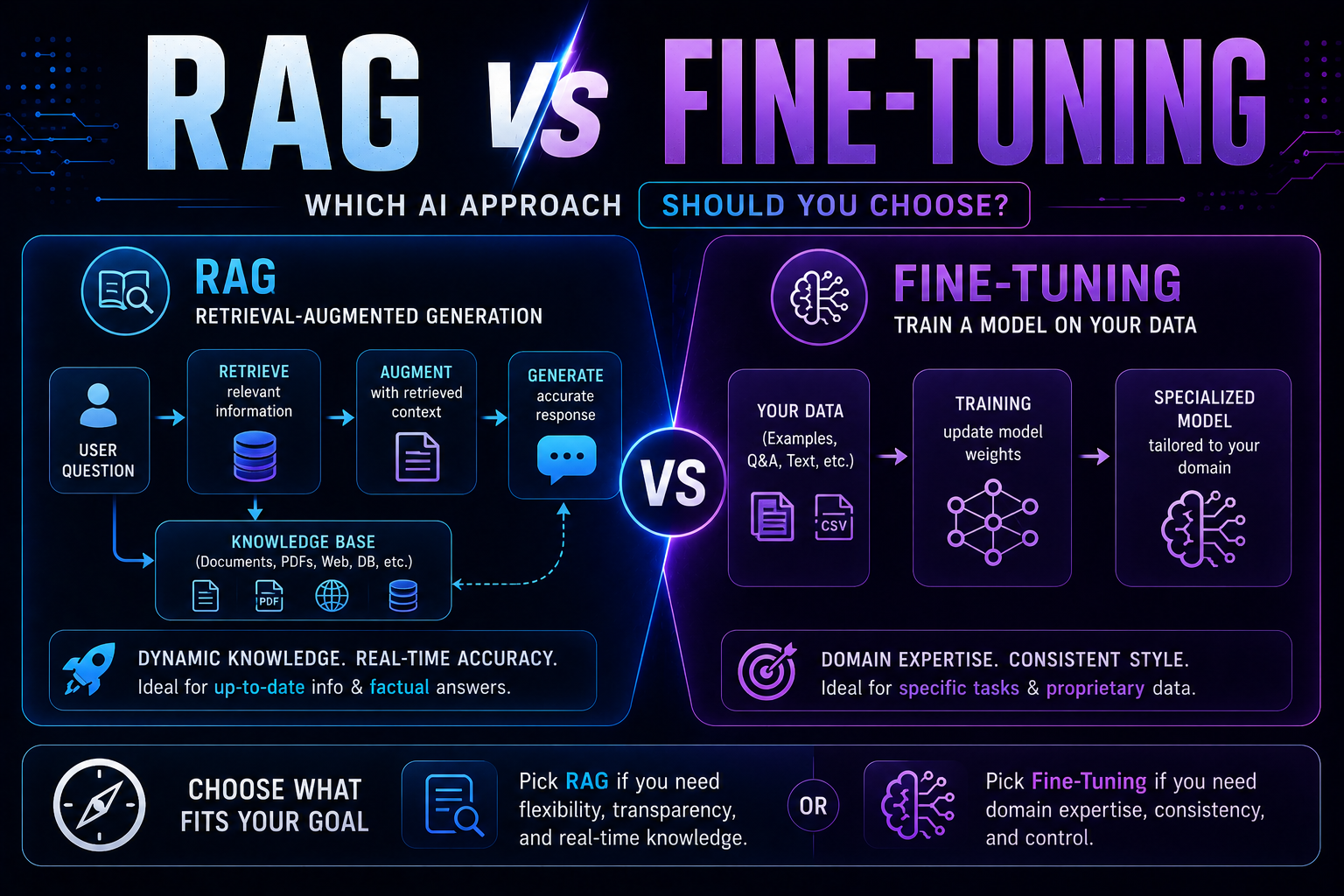
207RAG vs fine-tuning in 2026 — a practical guide covering when to use each, how both work with real code examples, the form vs facts distinction, hybrid approaches, true costs, and a decision framework to choose the right AI architecture for your use case.
May 22, 2026
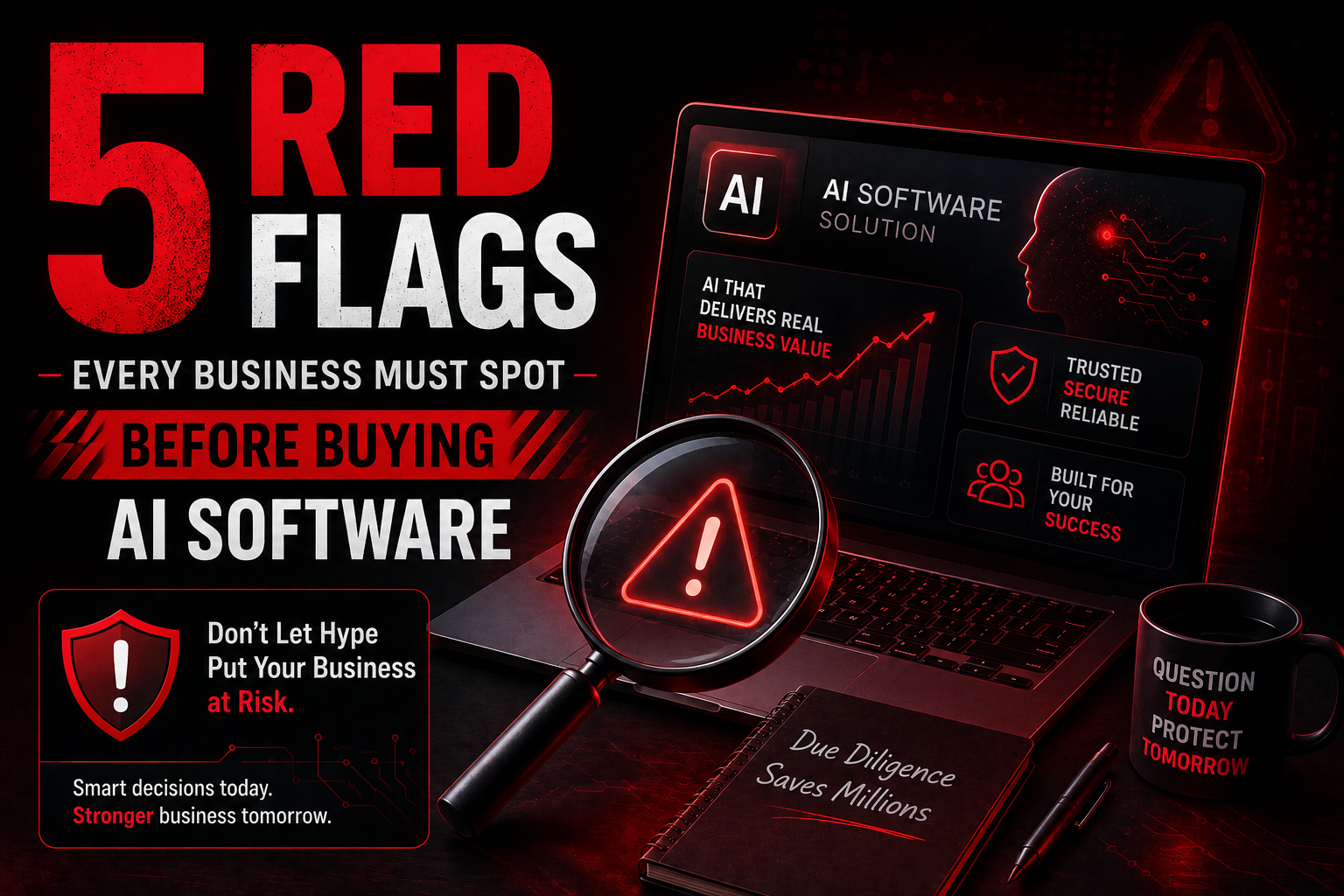
2075 red flags every business must spot before buying AI software — covering demo manipulation, data privacy gaps, missing error handling, AI-washing, and lock-in contracts, with a 4-week vendor evaluation framework.
May 13, 2026
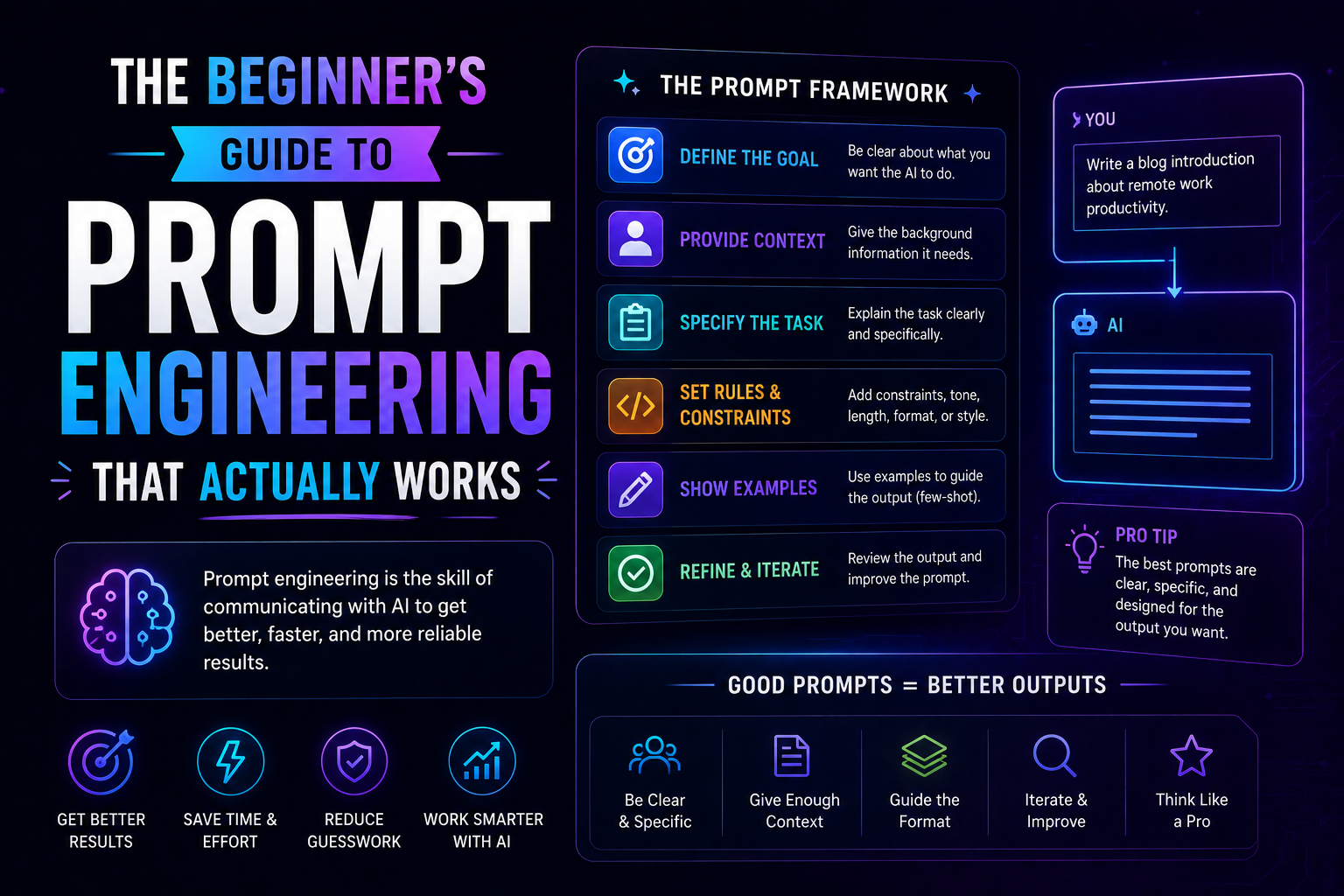
1160The beginner's guide to prompt engineering that actually works in 2026 — covering the RCTF framework, chain of thought, few-shot examples, output contracts, and model-specific tips for Claude, GPT-5, and Gemini.