AGI Isn't Coming—Agentic AI Is Here. The Difference Changes Everything
Stop waiting for AGI. Fredsazy explains why agentic AI is already here — and why confusing the two is hurting your strategy.

We've been promised artificial general intelligence for decades. It's always five years away. Meanwhile, something else arrived without fanfare: agentic AI. It's not human-level. It's not conscious. It doesn't think. But it takes actions, makes decisions, and gets work done. Here's why agentic AI matters more than AGI — and why waiting for the wrong thing is holding you back.
Let me clear something up.
I see it every week. Someone says "AGI is coming" and then describes something that's already here.
Or someone says "AI can't really do anything" and describes something AGI would do — which doesn't exist.
We're confused. All of us. And that confusion is costing us.
So let me draw a line.
AGI (Artificial General Intelligence) – A machine that can do anything a human can do. Learn any task. Reason across domains. Adapt like a person. Does not exist. Might not exist for years. Might never exist.
Agentic AI – A system that takes actions toward goals. Uses tools. Makes decisions within boundaries. Executes workflows. Exists right now. Running in production. Getting work done.
One is science fiction. One is shipping code.
The problem is, most people are waiting for AGI while ignoring agentic AI. That's like waiting for teleportation while ignoring airplanes. The future is already here. You're just looking at the wrong thing.
What Agentic AI Actually Does (Right Now)
Let me make this concrete.
An agentic AI is not a chatbot that answers questions. That's a language model. Basic.
An agentic AI is a system that:
Takes actions – Not just "here's what you should do." Actually does it. Calls APIs. Sends emails. Updates databases.
Uses tools – Knows when to search, when to calculate, when to query, when to ask for help. Chooses the right tool for the job.
Pursues goals – Not just responds to the last message. Works toward an objective across multiple steps. Remembers what it's trying to accomplish.
Handles uncertainty – When something fails, tries something else. When it doesn't know, asks for clarification. When it's stuck, escalates.
That's agentic AI. It's not a person. It doesn't think. It doesn't feel. But it gets work done.
And it's already in production.
A Real Example You Could Build Tomorrow
Let me give you something concrete.
An agentic AI for customer support:
- User asks: "Where's my refund?"
- Agent checks the订单系统. Order not found.
- Agent checks the payment system. Payment processed.
- Agent checks the refund system. No refund initiated.
- Agent determines: refund was never requested.
- Agent messages user: "I don't see a refund request. Would you like me to start one?"
- User says yes.
- Agent initiates refund. Updates both systems. Sends confirmation.
That's five systems. Multiple steps. Tool selection. Conditional logic. Error handling.
No human touched it. No AGI required. Just agentic AI doing real work.
You can build this today. Not "in five years." Today.
The Difference Changes Everything
Let me explain why this distinction matters for your strategy.
If you're waiting for AGI:
- You're not building anything because "the technology isn't ready"
- You're watching competitors pass you
- You're telling your team "we'll wait until it's smarter"
- You're falling behind
If you're building with agentic AI:
- You're shipping solutions to real problems today
- You're learning what works and what fails
- You're building muscle memory for the future
- You're winning now while others wait
The companies that succeed over the next five years won't be the ones who predicted AGI's arrival. They'll be the ones who started using agentic AI early, failed fast, learned continuously, and built capabilities incrementally.
Waiting is a strategy. It's just not a winning one.
What Agentic AI Cannot Do (Be Honest)
Let me balance this. Agentic AI is powerful. It's not magic.
Agentic AI cannot:
- Think creatively about novel problems
- Understand context outside its training
- Exercise genuine judgment or ethics
- Learn permanently across sessions (yet)
- Handle truly ambiguous instructions
These are real limits. They matter.
But here's the thing: most work doesn't require these things. Data entry doesn't need creativity. Report generation doesn't need ethics. Status checks don't need deep understanding.
Agentic AI is perfect for the boring, repetitive, multi-step work that humans hate. That's not a small category. That's most of what happens in enterprise operations.
Don't dismiss agentic AI because it can't do everything. Use it for what it can do.
The AGI Distraction (Why It's Harmful)
Let me say something provocative.
The obsession with AGI is actively hurting progress.
Why? Because every time someone says "AGI is coming," two things happen.
First, people expect too much.
They hear AGI and imagine a thinking partner. A colleague. Something that understands them. Then they try today's AI and are disappointed. It's not AGI. It was never supposed to be. But the expectation ruins their experience.
Second, people dismiss what's actually here.
"Sure, agentic AI can automate that workflow. But it's not really intelligent. It's just pattern matching." So what? The work gets done. The value is delivered. Who cares if it's not philosopher-level smart?
The AGI conversation is a distraction. It keeps us looking at a distant horizon instead of building what's in front of us.
What the Smart Teams Are Doing
I've been watching teams who get this right.
They're not waiting for AGI. They're not dismissing agentic AI. They're building.
Here's what that looks like:
They identify repetitive workflows. Every team has them. Data entry. Report generation. Status checking. Approval routing. These are perfect for agentic AI.
They start with human-in-the-loop. The AI suggests. The human approves. They learn where the AI is confident and where it needs help.
They expand incrementally. One workflow at a time. One system integration at a time. They don't boil the ocean. They drain it one bucket at a time.
They measure everything. Success rate. Time saved. Errors caught. They know exactly what agentic AI is giving them.
They stay realistic. Agentic AI fails sometimes. They accept that. They build fallbacks. They don't expect perfection. They expect progress.
This is not theoretical. Teams doing this today are already seeing 30-50% time savings on targeted workflows.
A Comparison That Helps
Let me put it this way.
AGI is like hiring a new employee. Smart. Adaptable. Expensive. Hard to find. Takes months to onboard. Might leave.
Agentic AI is like buying a machine. Does one thing well. Doesn't complain. Works 24/7. Cheap to run. Doesn't need vacation. Also doesn't think.
Most business problems need the machine. Not the employee.
You don't need an AGI to check if a server is down. You need an automated system that checks every minute and restarts it if needed.
You don't need an AGI to categorize support tickets. You need an agentic AI that reads the subject line, checks keywords, and routes to the right team.
Stop hiring employees for jobs a machine could do. Start buying machines. That's agentic AI.
The Brand Takeaway
Here's what I want people to think when they hear Fredsazy talk about AGI vs. agentic AI:
"They don't chase hype. They build what works. Now. Not in five years."
Anyone can speculate about AGI. The internet is full of philosophers and futurists.
The people who get noticed — who get trusted with real budgets, real teams, real impact — are the ones shipping agentic AI today. Learning. Failing. Improving. Winning.
AGI isn't coming. Not soon enough to matter for your 2026 goals.
Agentic AI is here. Right now. Ready to work.
The difference changes everything.
One Last Thing
Look at your team's workflow right now.
Find one process that is repetitive, rule-based, and multi-step. Something a human does weekly that follows a clear pattern.
Ask yourself: could an agentic AI do this?
Not perfectly. Not autonomously at first. But with oversight? With approval steps? With gradual automation?
If the answer is yes — and it probably is — stop waiting. Start building.
Not for AGI. For the AI that's already here.
Written by Fredsazy — because agentic AI is shipping code while AGI is still shipping papers.

Iria Fredrick Victor
Iria Fredrick Victor(aka Fredsazy) is a software developer, DevOps engineer, and entrepreneur. He writes about technology and business—drawing from his experience building systems, managing infrastructure, and shipping products. His work is guided by one question: "What actually works?" Instead of recycling news, Fredsazy tests tools, analyzes research, runs experiments, and shares the results—including the failures. His readers get actionable frameworks backed by real engineering experience, not theory.
Share this article:
Related posts
More from AI
May 27, 2026
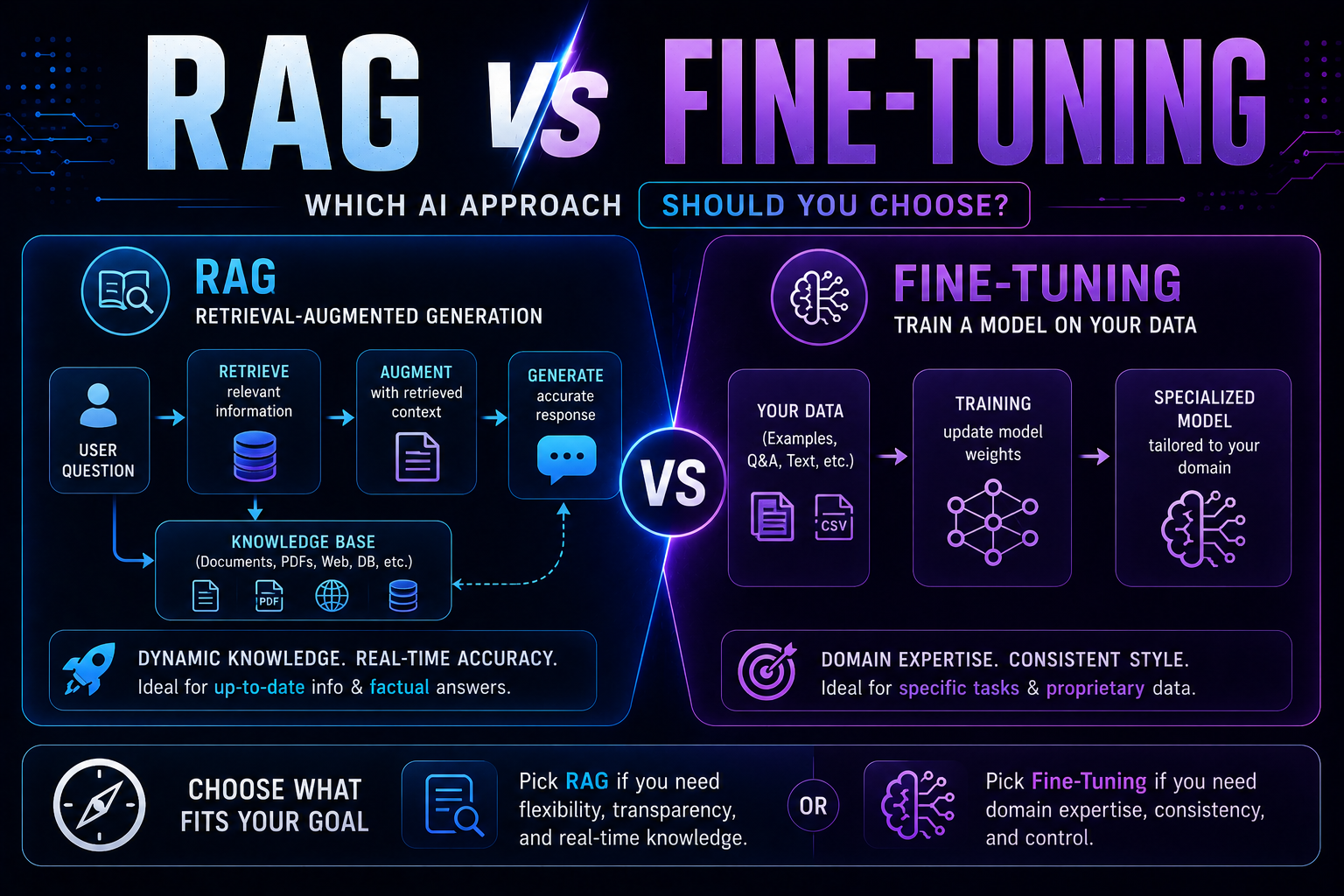
208RAG vs fine-tuning in 2026 — a practical guide covering when to use each, how both work with real code examples, the form vs facts distinction, hybrid approaches, true costs, and a decision framework to choose the right AI architecture for your use case.
May 22, 2026
2085 red flags every business must spot before buying AI software — covering demo manipulation, data privacy gaps, missing error handling, AI-washing, and lock-in contracts, with a 4-week vendor evaluation framework.

May 13, 2026
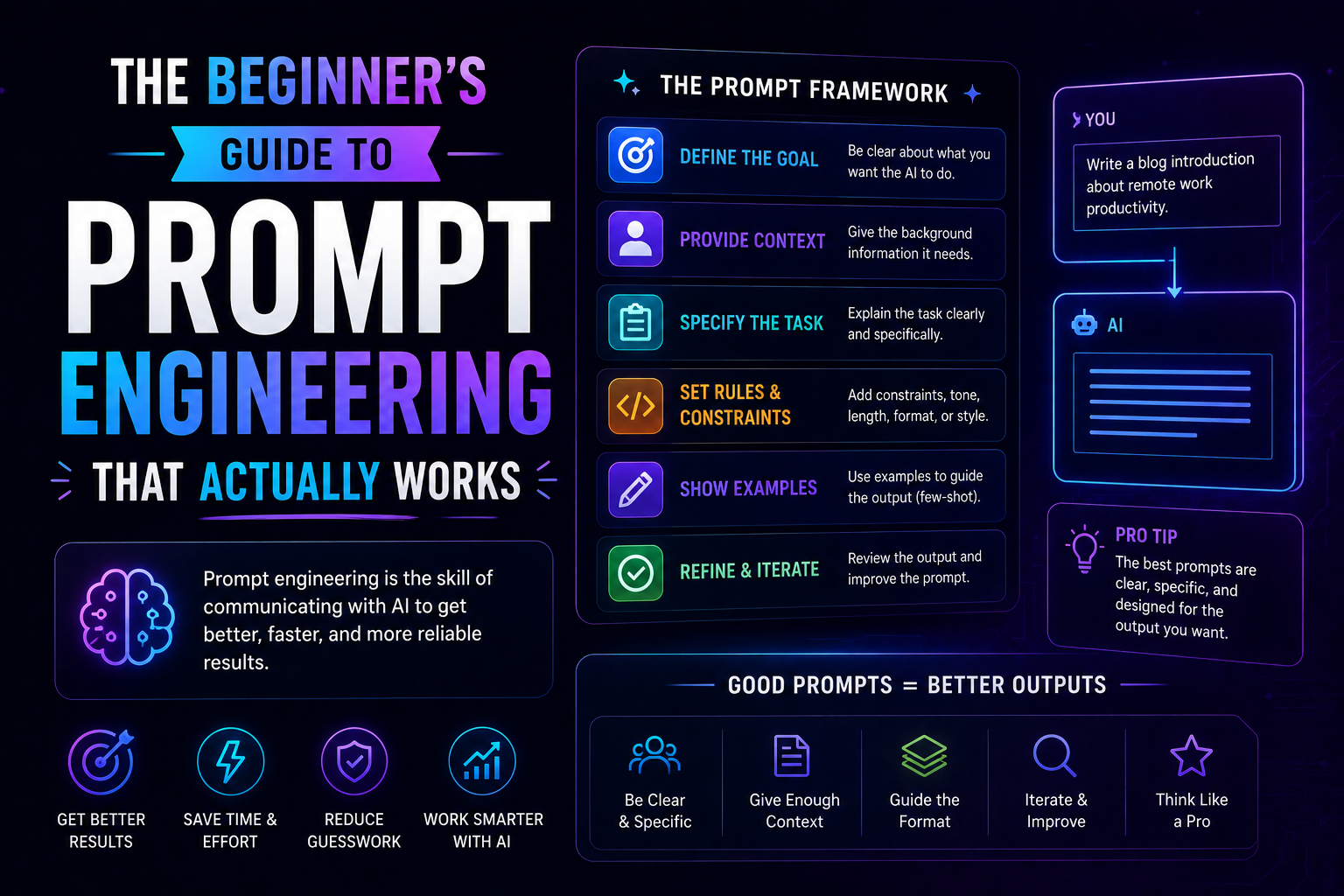
1165The beginner's guide to prompt engineering that actually works in 2026 — covering the RCTF framework, chain of thought, few-shot examples, output contracts, and model-specific tips for Claude, GPT-5, and Gemini.