How to Use AI Without Becoming Dependent on It
AI is powerful. So is a calculator. You still need to know math. Here's how to use AI as a tool, not a crutch.

I almost became dependent. Didn't even notice it happening.
It started small.
A tricky regex pattern. I could have spent ten minutes writing it. Instead, I asked the AI. Got it in ten seconds.
A Monday morning email. I could have written it myself. Instead, I had AI draft it. Tweaked two sentences. Sent it.
A bug in my code. I could have debugged it. Instead, I pasted the error into chat. Got the fix. Copied it. Moved on.
Each shortcut felt harmless. Efficient. Smart.
Then one day, I sat down to write a regex pattern without AI. My mind went blank. I couldn't remember how character classes worked. I had stopped practicing.
That scared me.
Not because AI is evil. Because I had let a tool do my thinking. And my skill had rusted without me noticing.
I didn't quit using AI. But I changed how I use it. Here's what I learned.
The Difference Between Tool and Crutch
A tool makes you better. You still understand the work. The tool just makes it faster or easier.
A crutch replaces your understanding. You can't do the work without it.
Calculator as tool: You know how to do math. The calculator just saves time.
Calculator as crutch: You don't know how to multiply. You just trust whatever the screen says.
Same tool. Different relationship.
AI is the same way.
The Signs You're Becoming Dependent
Watch for these. I've seen them in myself and others.
You paste errors into AI before reading them.
The error message often tells you exactly what's wrong. If you're skipping to the AI without reading, you're outsourcing your debugging skill.
You can't write a basic function without AI.
Boilerplate is fine. Complex logic is fine. But if you need AI to write a simple loop or an if/else statement, you've lost the fundamentals.
You trust AI output without questioning it.
The AI is confident. That doesn't mean it's right. If you're not spotting its mistakes, you're not really reviewing. You're just approving.
Your problem-solving skill has atrophied.
You used to stare at a problem for ten minutes, try things, fail, try again. Now you ask AI immediately. The struggle is gone. So is the learning.
You feel anxious coding without AI.
That's the big one. If the thought of turning off AI makes you nervous, you're dependent.
What I Changed
I didn't go cold turkey. I just added rules.
Rule 1: Try first. Then ask.
Before asking AI for anything, I try it myself. Five minutes minimum. Even if I'm pretty sure I'll fail.
Why? The struggle is where learning happens. If I skip it, I don't learn.
I try. I fail. I figure out what I don't know. Then I ask AI with a specific question.
The answer sticks because I earned it.
Rule 2: Never copy-paste without typing.
When AI gives me code, I don't copy-paste. I read it. Then I type it myself.
Typing forces me to see every character. I notice things I would have missed. I understand the code instead of just having it.
It takes a little longer. That's the point.
Rule 3: No AI for the first 30 minutes of my day.
Morning is when my brain is freshest. I protect that time.
Emails? I write them. Planning? I think. Debugging? I stare at the problem.
AI gets turned on after 30 minutes. By then, I've already warmed up my own brain.
Rule 4: One day a week without AI.
Sunday is my no-AI day. No ChatGPT. No Copilot. No autocomplete.
Just me and the editor.
I'm slower. That's fine. I remember what it feels like to solve problems with my own brain. I catch skills that have gotten rusty.
Rule 5: Ask "why" after every answer.
When AI gives me a solution, I ask: "Why does that work?"
Not always out loud. But in my head. I force myself to understand the reasoning.
If I can't explain why the solution works, I don't use it. I go learn first.
What I Ask AI For (Healthy Use)
AI is still incredibly useful. I just use it differently now.
Boilerplate and repetitive patterns.
I don't need to write the same CRUD endpoint for the tenth time. AI saves me keystrokes. I still understand the pattern.
Explanations of things I've already tried.
"Here's what I attempted. Here's where I got stuck. Can you explain why my approach didn't work?"
That's different from "write the solution." I'm asking to understand.
Generating options, not decisions.
"Here are three ways I could structure this. Which one would you explore first?"
The AI gives me ideas. I make the choice.
Learning new concepts.
"Explain dependency injection like I'm five." Then I go write it myself.
The AI is a teacher, not a ghostwriter.
What I Never Ask AI For
Anything I don't understand enough to review.
If I can't look at the output and spot mistakes, I shouldn't be using AI for it. I need to learn more first.
Important decisions with consequences.
AI doesn't know my business. It doesn't know my customers. It doesn't know the context. I decide.
Work I want credit for.
If AI writes it, it's not mine. I'll use AI to draft, brainstorm, or clean up. But the core work comes from me.
The Test: Turn Off AI for a Week
Try it. One week.
No AI for coding. No AI for email drafts. No AI for summaries.
Just you.
You'll feel slower. That's fine. You'll also remember things you forgot you knew. You'll struggle. That's learning.
At the end of the week, decide what you want to bring back. And what you want to keep doing yourself.
I did this. I brought back AI for boilerplate and research. I kept it away from my debugging and core logic.
My skills came back. My dependency went down.
The Bottom Line
AI is a tool. A powerful one. But tools should serve you, not replace you.
Ask yourself: if AI disappeared tomorrow, could you still do your job?
If the answer is no, you're dependent. Time to change.
If the answer is yes, you're using AI right.
Keep it that way.
Written by Fredsazy — because the best tool is the one you can still work without.

Iria Fredrick Victor
Iria Fredrick Victor(aka Fredsazy) is a software developer, DevOps engineer, and entrepreneur. He writes about technology and business—drawing from his experience building systems, managing infrastructure, and shipping products. His work is guided by one question: "What actually works?" Instead of recycling news, Fredsazy tests tools, analyzes research, runs experiments, and shares the results—including the failures. His readers get actionable frameworks backed by real engineering experience, not theory.
Share this article:
Related posts
More from AI
May 27, 2026
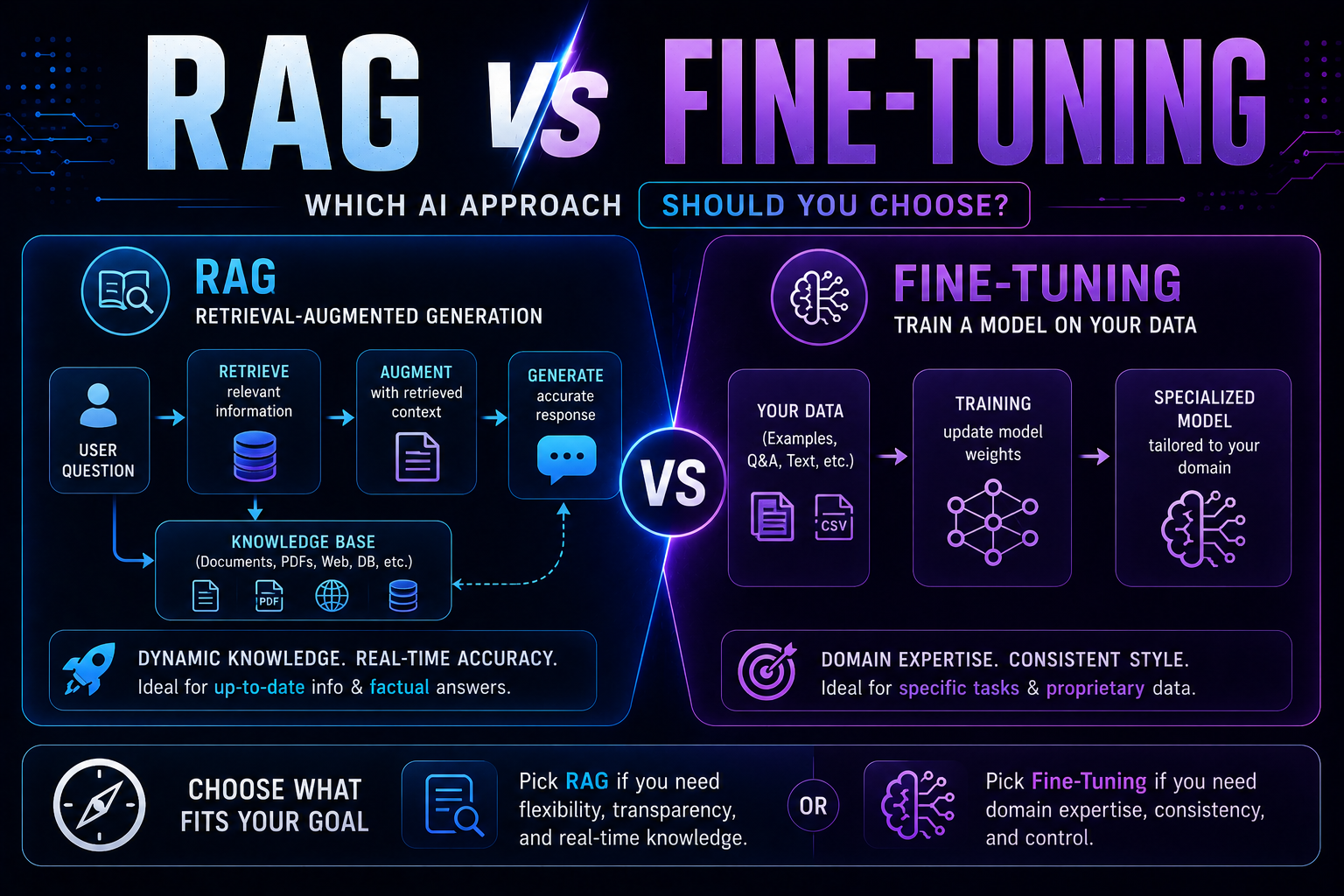
207RAG vs fine-tuning in 2026 — a practical guide covering when to use each, how both work with real code examples, the form vs facts distinction, hybrid approaches, true costs, and a decision framework to choose the right AI architecture for your use case.
May 22, 2026
2075 red flags every business must spot before buying AI software — covering demo manipulation, data privacy gaps, missing error handling, AI-washing, and lock-in contracts, with a 4-week vendor evaluation framework.

May 13, 2026
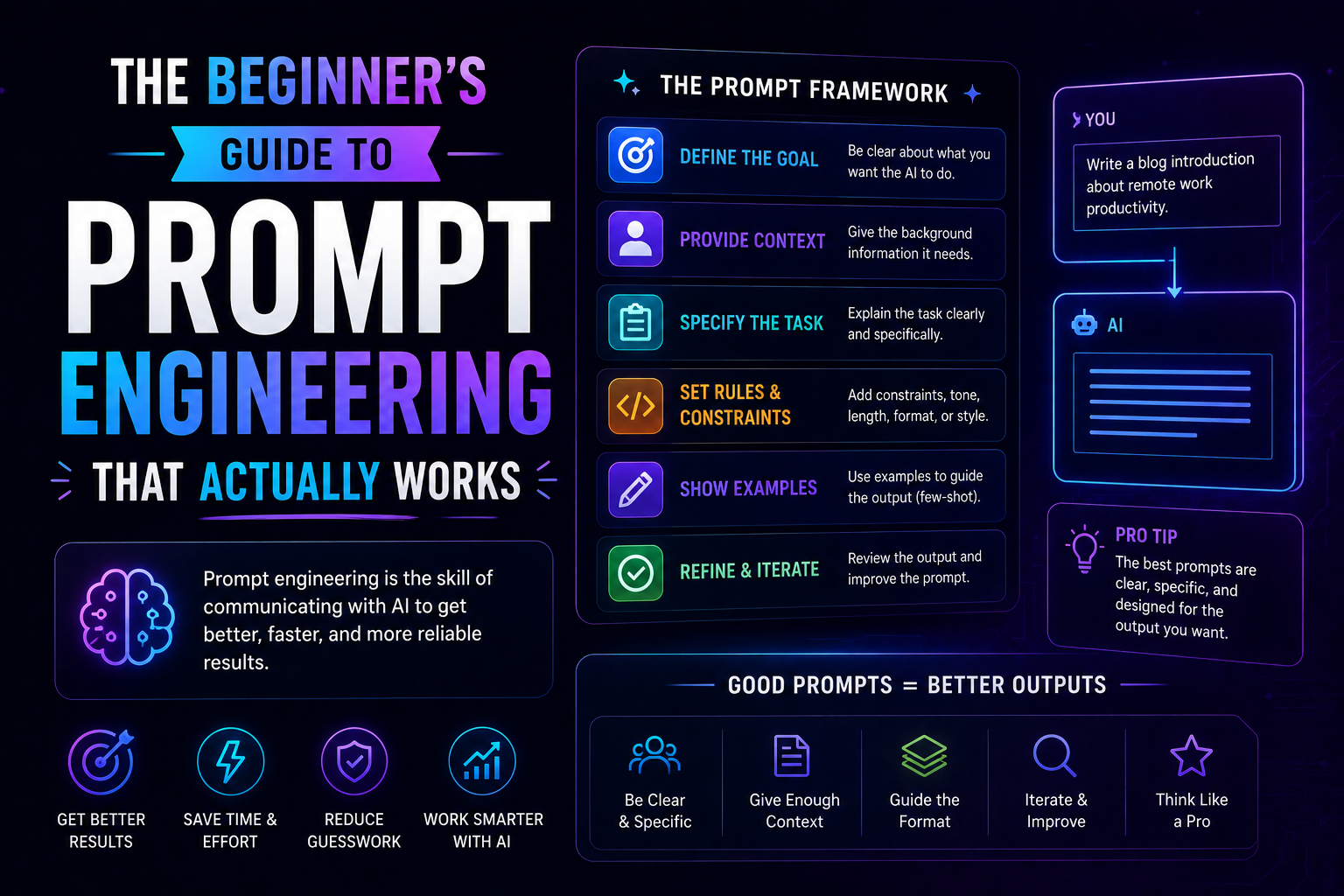
1160The beginner's guide to prompt engineering that actually works in 2026 — covering the RCTF framework, chain of thought, few-shot examples, output contracts, and model-specific tips for Claude, GPT-5, and Gemini.