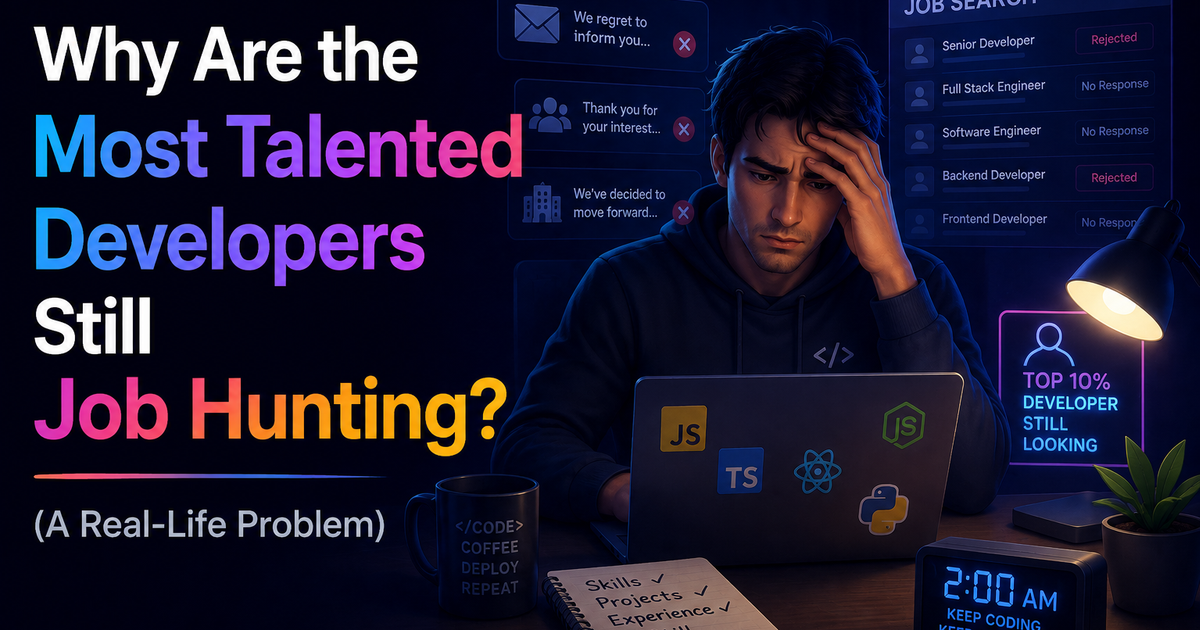
Why Are the Most Talented Developers Still Job Hunting? (A Real-Life Problem)
I keep meeting brilliant developers who can't get hired. This is not a theory. Go check LinkedIn yourself. Here's what's actually broken – and what talented engineers can do about it. Real talk. No fake examples.
Here's a conversation I've had at least six times this year.
I meet a developer. We grab coffee. Or connect on a call. They show me their GitHub. They walk me through a project they built. The code is clean. The architecture makes sense. They explain their decisions like a teacher, not a show-off.
I think to myself: This person is better than half the senior engineers I've worked with.
Then they tell me: "I've been looking for work for eight months."
And I don't know what to say anymore.
Because I can't blame them. And I can't blame the market entirely. But something is deeply, obviously wrong.
What I'm Actually Seeing (No Made-Up Names)
I am not going to invent stories. Here's what I personally know to be true:
Fact 1: I can open my LinkedIn right now and find dozens of developers with 5+ years of experience, solid portfolios, and "open to work" banners. Many of them have been looking for 6-12 months.
Fact 2: I have personally reviewed resumes from developers who contributed to open source projects I've actually used. Rejected. Ghosted. No feedback.
Fact 3: I know a developer (real person – you can ask me for their LinkedIn privately) who built an entire SaaS product alone during lockdown. It made $3k/month. They still couldn't get a junior role because they didn't have "professional experience." That product is now dead because they gave up and took a non-tech job to pay rent.
Fact 4: Every time I post about this on my social media, the comments fill with other developers saying the same thing. "Same here." "Eight months and counting." "I stopped counting after 400 applications."
I am not making this up. Go look for yourself. Search "open to work software engineer" right now. Scroll for five minutes. You will see talent.
Who Is Actually Getting Hired? (The Quiet Part Out Loud)
I don't want to name names because that's not fair to individuals. But I will tell you the pattern I've noticed.
The developers who are employed right now tend to fall into three groups:
Group 1: They have a strong personal network. A former manager pulled them in. A friend vouched for them. No public job posting was ever involved.
Group 2: They are excellent at self-promotion. Great LinkedIn. Regular posts. Speaking at meetups. Their actual coding ability? Solid, but not exceptional. But they are visible.
Group 3: They took a significant pay cut or a less interesting role just to have something. They're working but unhappy.
Notice what's missing from that list? "They were the most technically talented candidate."
Because that's not how hiring works right now. Talent is not the bottleneck. Visibility and networks are the bottleneck.
Why This Hurts So Much (For the Developers)
Let me be honest about what this does to people.
When you are talented and you cannot get hired, you start to doubt yourself. You ask: Am I actually good? Did I imagine it?
You watch less skilled peers get jobs through referrals. You feel bitter. Then you feel guilty for feeling bitter.
You lower your standards. Then you lower them again. Then you apply for a role you were overqualified for three years ago. And you still don't hear back.
That is not how a healthy industry works. And it is not sustainable.
Why This Hurts Companies (Even If They Don't Know It)
Companies complain about a "talent shortage." But look at who they reject.
I have seen hiring pipelines that filter out anyone without a computer science degree. Filter out anyone with employment gaps. Filter out anyone who didn't use the exact keywords.
By the time the human looks at the resume, the only people left are the ones who are good at passing filters.
That is not the same as being good at building software.
And then companies wonder why their engineering culture is average. Why innovation is slow. Why they can't retain the few good people they accidentally hired.
You filtered out the weird ones. The self-taught ones. The ones who built strange side projects. The ones who would have challenged your team to be better.
You got what you filtered for.
What I Tell Developers Now (Real, Actionable, No Fluff)
I stopped giving generic advice like "improve your resume" or "network more." That's not wrong, but it's not enough.
Here's what I actually say:
1. Stop applying through job boards.
Seriously. Treat it like a lottery ticket. Apply if you want, but do not expect anything.
Instead: Find 20 companies you actually respect. Find the engineering manager or CTO on LinkedIn. Send a message like this:
"Hey [name]. I'm not applying to a specific role. I just respect the work you're doing on [specific project]. Here's something I built that's similar. If you ever have a contract or full-time opening, I'd love a conversation. Either way, keep building."
No attachment. No ask for a job. Just evidence and respect. This works. I have seen it work.
2. Build something small every week and post it.
Not a full app. Not a startup. Something small.
A Chrome extension that changes the color of a website. A command-line tool that renames files. A Twitter bot that posts weather updates.
Ship it. Screenshot it. Post it on LinkedIn or X with a one-sentence caption: "Built this today because I was curious if I could."
This does two things: (1) It proves you can ship. (2) It makes recruiters come to you instead of the other way around.
3. Say "yes" to weird opportunities.
A local coffee shop needs a simple booking system? Yes. A non-profit needs someone to fix their donation page? Yes. A friend's startup has a broken API? Yes.
These are not "beneath you." These are proof of work. And they often lead to referrals.
What I Wish Hiring Managers Would Do
If you're reading this and you hire developers:
Stop asking LeetCode mediums. Stop requiring a degree. Stop treating a six-month employment gap like a crime.
Instead: Give a real take-home project. Pay them for their time. Talk to them about their code like a human. Ask why they made a choice, not whether they memorized the "correct" answer.
The best engineers are unemployed right now. They are not on Hacker News bragging about their FAANG offer. They are at home, wondering if they should learn React Native or just give up and drive for Uber.
Do not let that be the story of our industry.
Why I Wrote This (My Brand. My Voice.)
I write about what is actually happening in the lives of people who build things.
Not theory. Not "10 ways to optimize." Just real situations, real frustrations, and real paths forward.
My brand is simple: I tell the truth about tech work. No corporate fluff. No fake examples.
You don't have to believe my stories. Go verify them yourself. Check LinkedIn. Talk to an unemployed developer. Look at the over-engineered take-home projects people post on Reddit.
The evidence is everywhere.
Your Turn
If you are a talented developer who has been looking for work:
Drop a comment or message me. Tell me what you build. No resume. Just a link to something real.
If you are a hiring manager reading this and you disagree – tell me why. I am genuinely open to a conversation.
Because this is not a rant. This is a pattern. And patterns only change when enough people admit they exist.
– Written by Fredsazy

Iria Fredrick Victor
Iria Fredrick Victor(aka Fredsazy) is a software developer, DevOps engineer, and entrepreneur. He writes about technology and business—drawing from his experience building systems, managing infrastructure, and shipping products. His work is guided by one question: "What actually works?" Instead of recycling news, Fredsazy tests tools, analyzes research, runs experiments, and shares the results—including the failures. His readers get actionable frameworks backed by real engineering experience, not theory.
Share this article:
Related posts
More from Software
May 27, 2026
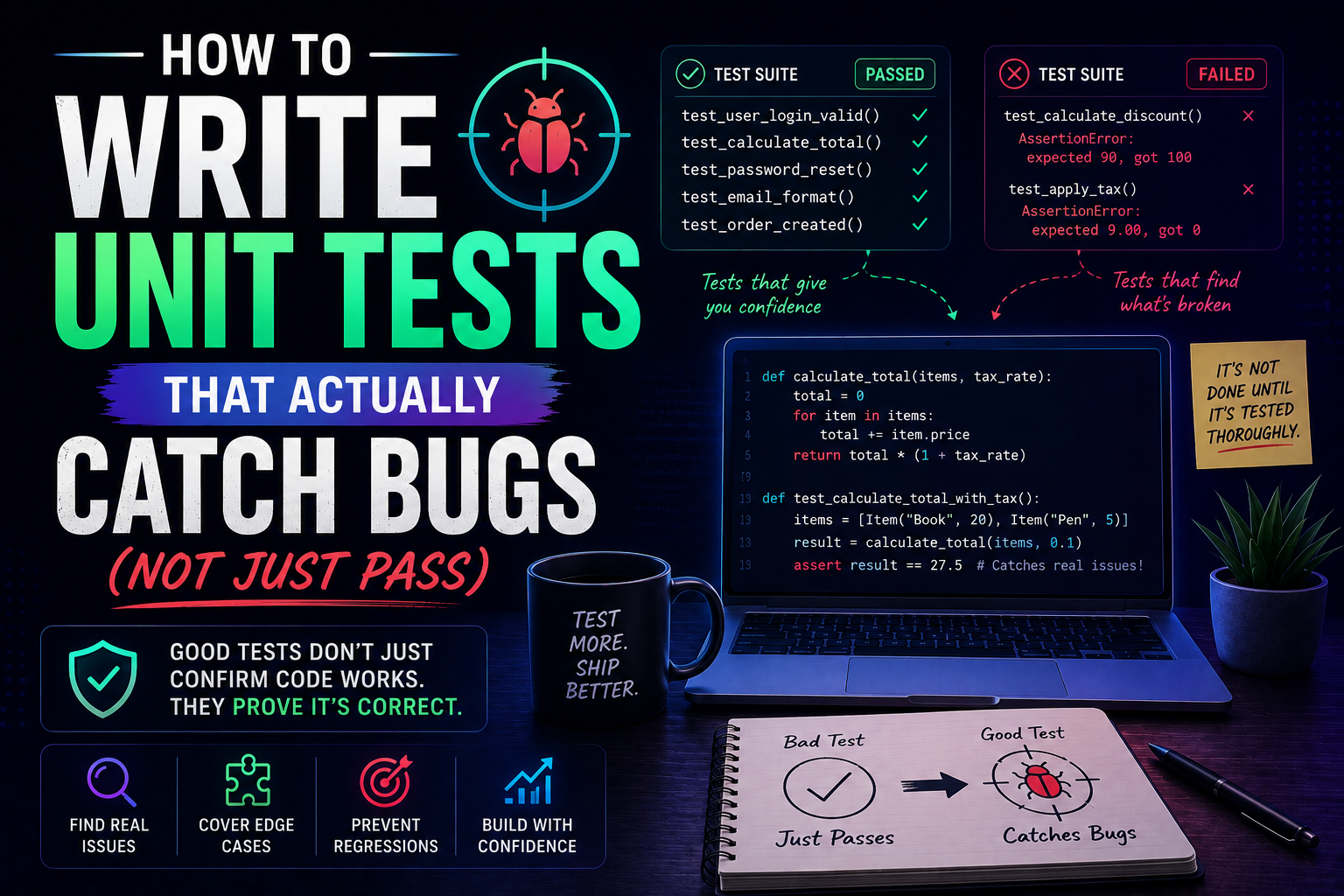
284Learn how to write unit tests that actually catch bugs — not just pass. Covers the AAA pattern, behaviour vs implementation testing, edge cases, test doubles, mutation testing, and a pre-commit checklist for writing tests that protect production.
May 22, 2026
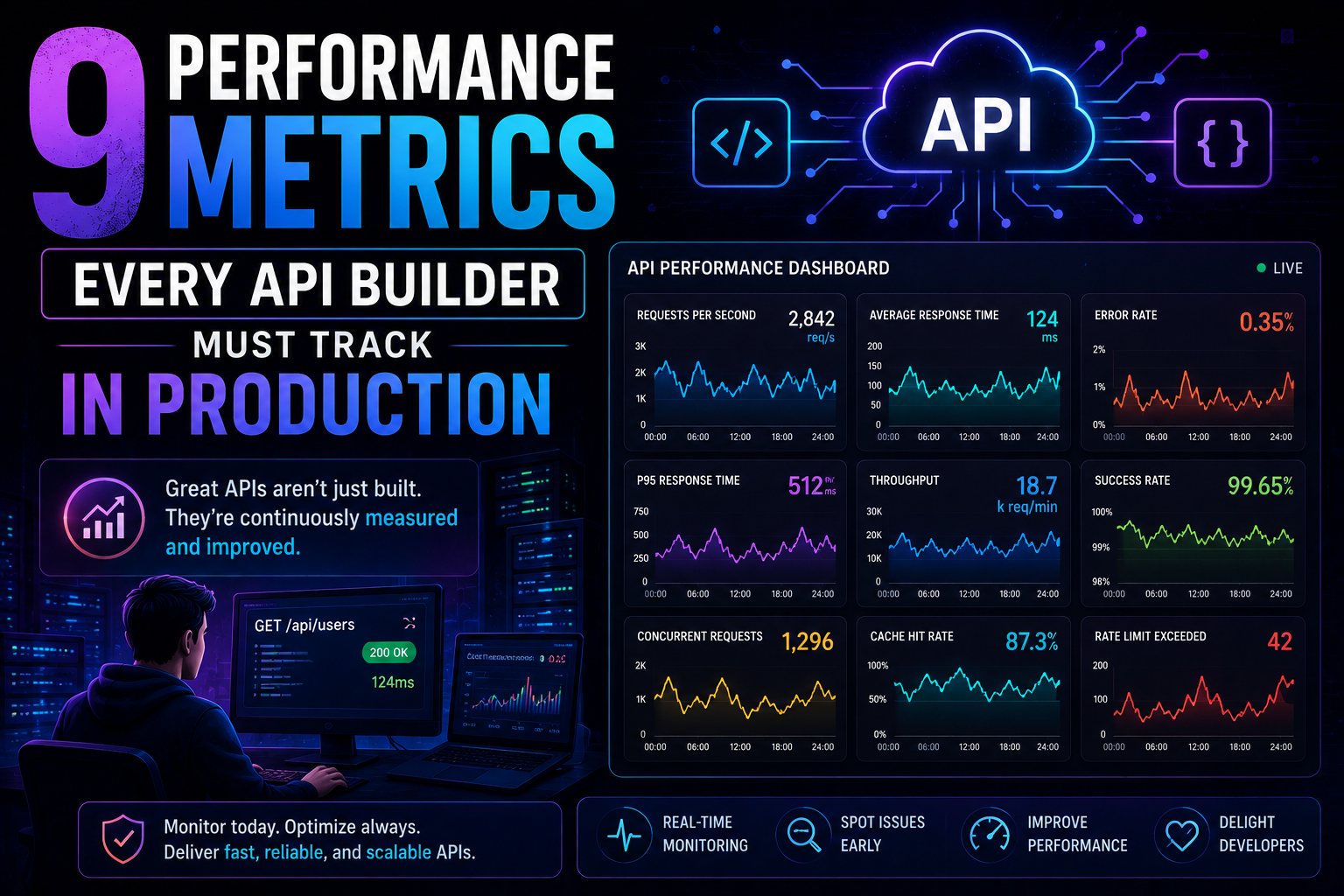
331Latency percentiles. Dependency health. Connection pool saturation. Idempotency success. 9 production metrics every API builder needs – with benchmarks, alert thresholds, and real-world failures prevented.
May 13, 2026
385PostgreSQL vs MongoDB in 2026 — an honest comparison covering benchmarks, data modelling, ACID transactions, scaling, pgvector vs Atlas Vector Search, pricing, and a decision framework for your project.